

Why Your Shopify Store Abandonment Rate Is Killing Revenue and How Custom Development Fixes It
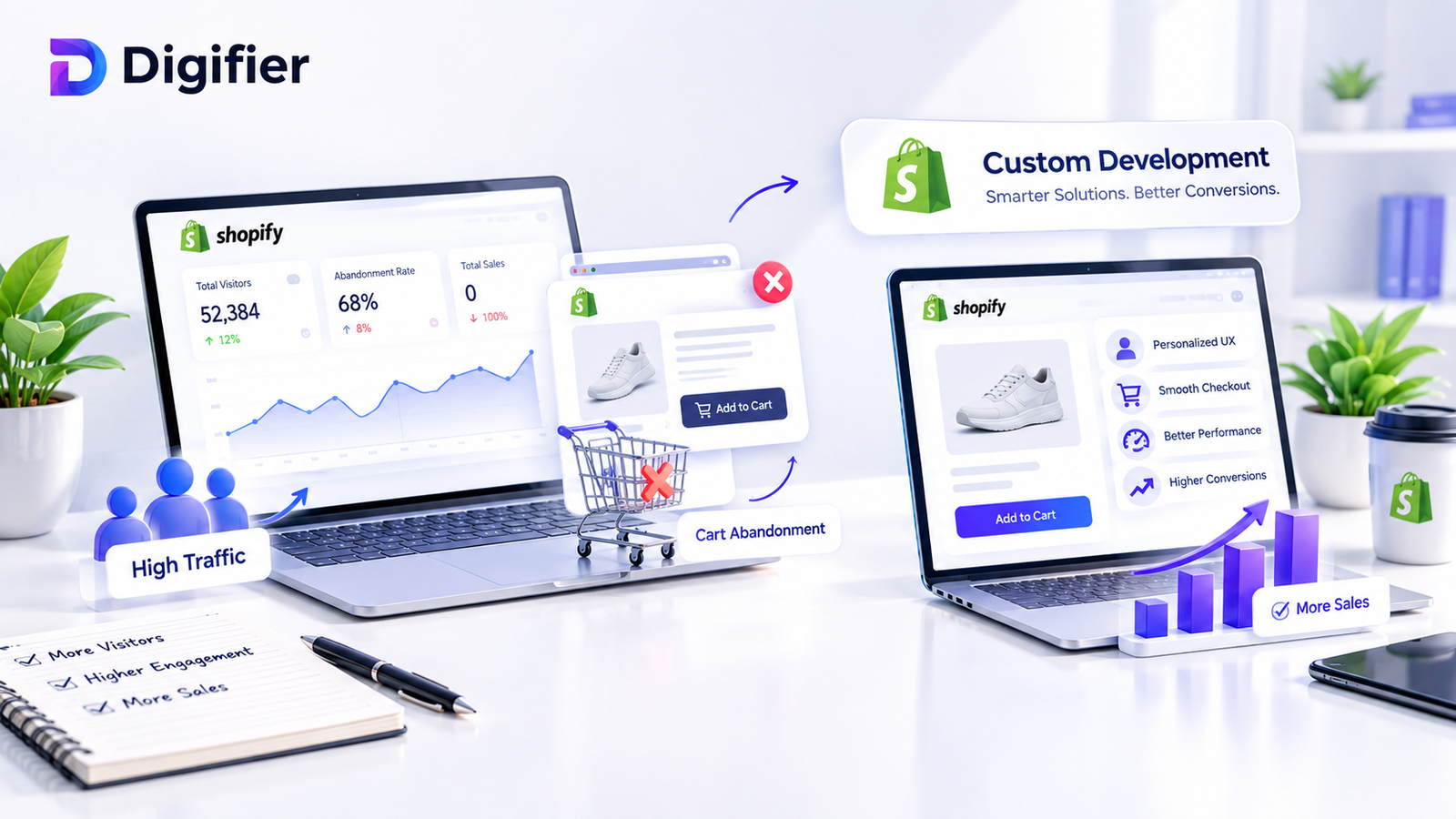
Online shoppers frequently browse product catalogs, add items to their carts, and then walk away right before completing the purchase. For high-growth brands, this breakdown between intent and conversion represents a substantial loss in revenue. While off-the-shelf Shopify themes provide an accessible entry point for new merchants, rigid design structures and bloated app stacks often create subtle friction during the checkout journey. When slow load times, disruptive pop-ups, or complicated checkout forms frustrate users, cart abandonment predictably spikes.
Implementing sustainable Shopify store cart abandonment fixes requires going beyond standard template adjustments and generic plugin installations. Tailored architecture allows storefronts to eliminate unexpected cost surprises, simplify multi-step forms, and deliver frictionless mobile experiences. By leveraging targeted engineering, e-commerce businesses can streamline user journeys, enhance brand trust, and systematically convert high-intent traffic into completed transactions.
Direct Answer: High cart abandonment on Shopify is typically caused by friction points such as slow page loads, forced account creation, unexpected fees, and rigid checkout interfaces. Custom Shopify development resolves these issues by optimizing code architecture, streamlining payment pathways, integrating headless checkout logic, and tailoring mobile micro-interactions to create a seamless purchasing workflow that directly protects store revenue.
Table of Contents
- Understanding the Structural Causes of Cart Abandonment
- The Hidden Friction of Third-Party Shopify Apps
- Essential Shopify Store Cart Abandonment Fixes via Custom Code
- Optimizing Mobile Checkout Micro-Interactions
- Plugin Stacks vs. Custom Shopify Development
- Aligning Technical Architecture with Long-Term Growth
Understanding the Structural Causes of Cart Abandonment
Cart abandonment is rarely a sign that a customer has lost interest in a product. More often, it indicates that the purchasing path presented critical hurdles right when buyer intent was highest. Standard storefront configurations frequently introduce cognitive fatigue through unnecessary input fields, unclear tax calculations, and confusing navigation paths.
When evaluating user behavior across digital storefronts, common operational friction points include:
- Unexpected Cost Transparency: Shipping costs or handling fees calculated only at the final step cause immediate buyer pushback.
- Forced User Registration: Mandatory account creation disrupts impulse purchases, prompting users to abandon their active sessions.
- Sub-optimal Mobile Interfaces: Small input targets, poor auto-fill implementation, and cluttered layouts lead to user errors on touch devices.
- Page Latency and Script Delays: Every second spent waiting for script-heavy widgets to render reduces user confidence during checkout.
Addressing these structural flaws requires a dedicated shift toward streamlined checkout mechanics. Modern consumers expect single-click express payments, dynamic address verification, and immediate load times across every step of their journey.
The Hidden Friction of Third-Party Shopify Apps
To compensate for theme limitations, merchants often install dozens of third-party plugins. While individual apps offer quick features—such as cross-sell drawers, dynamic countdown timers, or loyalty badges—stacking multiple external scripts gradually degrades performance.
Each external plugin injects foreign JavaScript files, stylesheet dependencies, and tracking pixels into the storefront head. These scripts frequently block primary thread execution, causing visual layout shifts (CLS) and rendering delays. When multiple app pop-ups compete for screen real estate simultaneously, the resulting interface feels chaotic rather than persuasive.
Over-reliance on disjointed plugins also creates styling inconsistencies across the buyer funnel. Custom engineering replaces fragmented app reliance with unified theme code, ensuring that performance metrics stay pristine and user interfaces remain cohesive.
Essential Shopify Store Cart Abandonment Fixes via Custom Code
Tailored development allows engineers to modify Liquid components, utilize Storefront API endpoints, and structure lightweight frontend JavaScript that directly targets drop-off points. Below are practical strategies for implementing native, sustainable code solutions.
1. Engineering Slide-Out Carts with Dynamic Logic
Redirecting buyers to a standalone checkout page every time an item is added creates unnecessary navigation steps. A custom ajax-driven slide-out cart keeps shoppers on the product page while displaying real-time updates, clear sub-totals, and transparent shipping calculators.
Custom cart drawers can also dynamically calculate shipping thresholds, displaying progress bars that encourage customers to qualify for free shipping naturally, reducing price-related checkout friction.
2. Streamlining Checkout Form Fields and Express Payments
Unnecessary form requirements slow down checkout completion. Tailored development allows brands utilizing Shopify Checkout Extensibility to reorganize layout sequences, automate zip-code expansion, and seamlessly embed express checkout buttons (Shop Pay, Apple Pay, Google Pay) right at the top of the interface.
Businesses seeking comprehensive e-commerce website services can systematically diagnose and refactor these user pathways. Organizations like Digifier Web Technologies LLP focus on aligning technical execution with conversion rate optimization, building custom storefront workflows that remove operational bottlenecks and improve checkout velocity.
Optimizing Mobile Checkout Micro-Interactions
A significant majority of online traffic originates from smartphones, yet desktop-first checkout patterns continue to undermine mobile conversions. Mobile devices suffer disproportionately from slow scripts, small interactive targets, and unresponsive form logic.
When designing effective mobile Shopify store cart abandonment fixes, custom development focuses on mobile-native design primitives:
- Sticky CTA Bars: Persistent “Add to Cart” and “Proceed to Checkout” elements remain within thumb reach regardless of scroll depth.
- Adaptive Keyboard Triggers: Ensuring form inputs automatically call up relevant numeric keypads for credit card and telephone entries.
- Inline Validation: Immediate visual validation of email addresses and shipping locations prevents frustrating post-submit page reloads.
Storefronts burdened with legacy code, accumulated app bloat, or outdated visual structures may require targeted website rebuilding services to fully modernize theme architecture and establish a responsive, clean core codebase.
Plugin Stacks vs. Custom Shopify Development
Deciding between off-the-shelf application plugins and tailored store engineering involves comparing operational trade-offs across speed, scalability, cost structure, and user UX consistency.
Aligning Technical Architecture with Long-Term Growth
Resolving cart abandonment is not a quick visual fix; it is an ongoing performance strategy. As e-commerce trends shift and digital advertising acquisition costs rise, maximizing order volume from existing web traffic becomes vital for profitability.
By treating the checkout workflow as a core engineering product rather than a standardized template, merchants can protect margins, reduce marketing bounce rates, and build lasting customer trust. Custom theme assets, streamlined API communication, and responsive interface design form the bedrock of sustainable e-commerce growth.
Conclusion
High checkout drop-off rates directly erode revenue, making strategic Shopify store cart abandonment fixes an essential priority for expanding e-commerce businesses. While third-party plugins offer temporary patches, long-term stability requires cleaner architecture, streamlined checkout steps, and responsive mobile interfaces built directly into your theme code.
By removing unnecessary scripts, clarifying shipping calculations, and enabling quick express payment options, online retailers transform passive shoppers into confident buyers. Investing in robust custom development fixes the structural root causes of abandonment, driving sustained performance and maximizing customer lifetime value.