

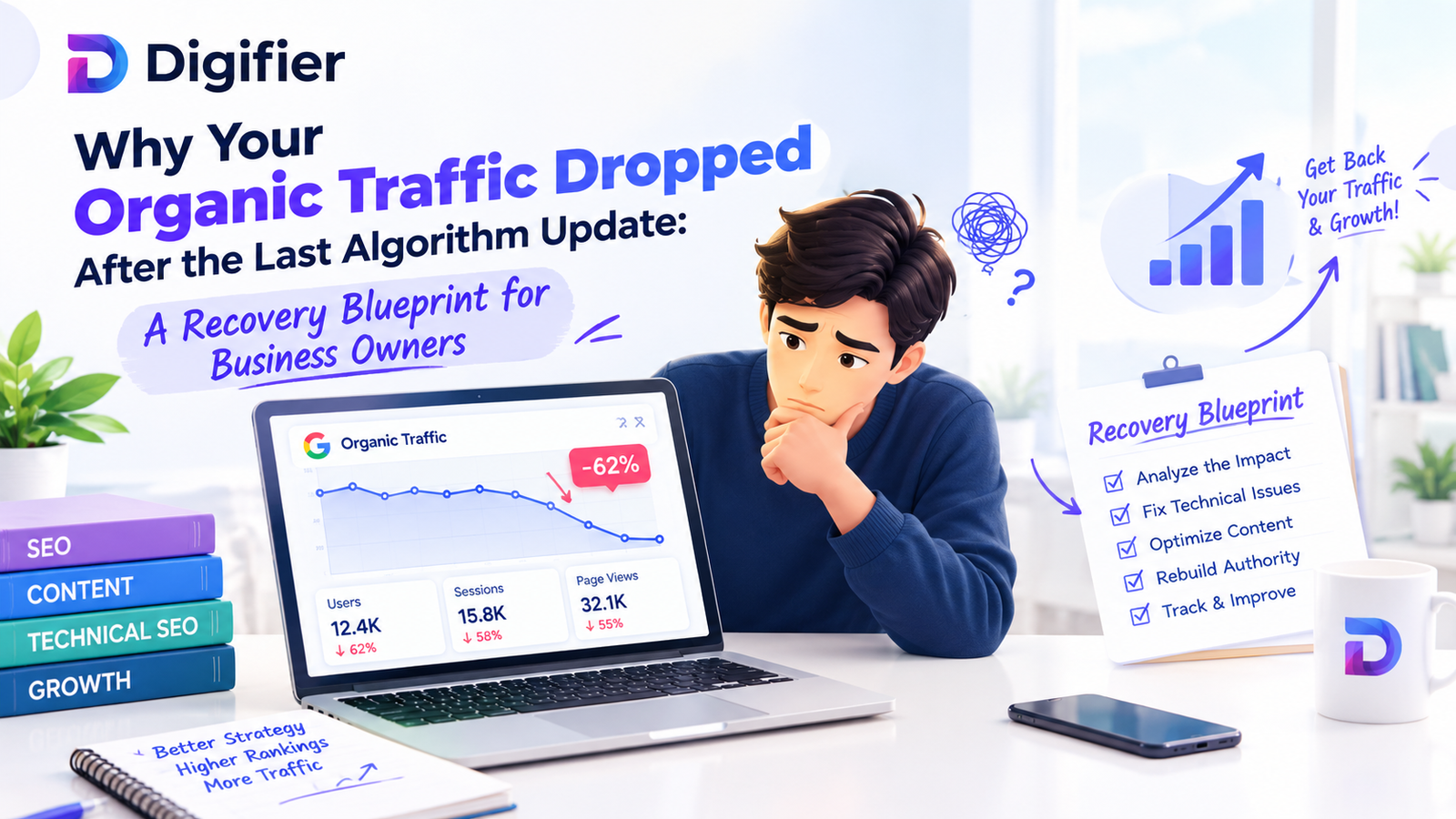
Why Your Organic Traffic Dropped After the Last Algorithm Update: A Recovery Blueprint
Experiencing a sudden decrease in website visitors after a major search engine update can disrupt business operations, reduce incoming leads, and create understandable frustration for executive teams. When search engines refine their ranking systems, thousands of commercial websites experience shifts in visibility almost overnight. Understanding why these changes happen is the first step toward regaining lost search presence.
Navigating an organic traffic drop SEO recovery process requires a calm, systematic analysis rather than quick emotional fixes. Modern search algorithms evaluate hundreds of micro-signals, ranging from user search intent alignment and content depth to technical site health and brand credibility. Rebuilding search performance involves identifying the exact underlying causes of the drop and implementing structured improvements across your digital assets.
Direct Recovery Summary: An organic traffic drop after a core algorithm update typically stems from changed search intent criteria, lowered content quality evaluation, technical crawling barriers, or shifts in search engine layout. Recovery requires verifying technical site health, auditing losing pages against top-ranking competitors, eliminating unhelpful content, and strengthening topical authority across affected key pages.
Table of Contents
- Understanding Why Search Engine Algorithm Updates Cause Traffic Drops
- Diagnosing the Root Cause of Your Organic Visibility Loss
- Primary Factors That Trigger Core Update Traffic Adjustments
- Comparing Types of Search Engine Visibility Loss
- Step-by-Step Action Plan for Organic Traffic Drop SEO Recovery
- Common Recovery Mistakes Business Owners Must Avoid
- Conclusion: Securing Long-Term Search Visibility
Understanding Why Search Engine Algorithm Updates Cause Traffic Drops
Search engines continuously evolve to deliver more accurate, helpful, and relevant results to users. Core updates do not target specific websites to punish them; instead, they reassess content quality across the entire web. When search algorithms adjust their scoring systems, pages that previously ranked well may be surpassed by competitors who satisfy user intent more effectively.
A drop in rankings often means that search engines have changed how they interpret the intent behind specific queries. For instance, if a search engine determines that users searching for a technical concept prefer interactive tools or concise summaries over lengthy blog articles, detailed pages may experience ranking adjustments. Recognizing that ranking changes reflect relative shifts in algorithmic priorities is fundamental to building a viable recovery strategy.
Furthermore, search systems increasingly prioritize Experience, Expertise, Authoritativeness, and Trustworthiness (E-E-A-T). Websites that lack clear author credentials, primary research, or transparent business background details often lose ground to organizations that demonstrate authentic industry practice.
Diagnosing the Root Cause of Your Organic Visibility Loss
Before making changes to your website, you must isolate whether the traffic decline coincides directly with an official algorithm deployment or stems from an internal technical issue. Premature changes without accurate diagnosis often compound existing ranking losses.
Isolate Timeline and Specific Landing Pages
Begin by cross-referencing your analytics reporting with official search engine update release dates. Determine whether the decline affected your entire domain or was restricted to specific subfolders, product categories, or informational blog sections. Widespread drops across all templates usually point to sitewide quality evaluation changes or global technical errors, whereas localized drops indicate page-specific intent mismatches.
Rule Out Technical and Tracking Discrepancies
Verify that the reported drop is genuine organic traffic loss rather than an analytics tracking code failure, canonical tag misconfiguration, or robots.txt file blocking critical resources. Inspect your search performance dashboard for manual action notices or security flags. If no manual warnings exist, the traffic movement is purely algorithmic.
Primary Factors That Trigger Core Update Traffic Adjustments
Search engine updates evaluate websites across structural, semantic, and experiential dimensions. Identifying which factor triggered your traffic reduction helps focus your recovery efforts on high-impact corrections.
- Substantial or Thin Content Nuances: Pages that rephrase easily available public information without offering original commentary, custom data, or practical insights frequently experience ranking drops.
- User Experience Obstacles: Excessive intrusive pop-ups, slow layout render speeds, or frustrating mobile navigation can prompt search engines to favor alternative websites that offer seamless interactions.
- Unclear Site Architecture: Disconnected content clusters, broken internal links, or conflicting canonical tags make it difficult for search crawlers to establish your website’s primary core topics.
- Outdated Information: Content containing outdated guidelines, dead external references, or expired product descriptions loses trust over time compared to regularly maintained resources.
When organizations need to audit complex site frameworks and restore search engine trust, partnering with experienced specialists in professional SEO services ensures technical accuracy and aligns content architecture with current search engine guidelines.
Comparing Types of Search Engine Visibility Loss
Not all organic drops stem from the same mechanism. Understanding the difference between algorithmic re-evaluations, manual penalties, and technical bugs is crucial for applying the correct recovery procedure.
Step-by-Step Action Plan for Organic Traffic Drop SEO Recovery
Executing a effective organic traffic drop SEO recovery requires a structured approach. Rather than modifying pages randomly, follow this methodical plan to restore your organic search performance.
- Audit Top-Losing Landing Pages: Export organic performance data comparing pre-update and post-update windows. Identify the top pages that suffered the largest drop in clicks and impressions.
- Analyze Search Intent for Target Queries: Perform search queries for key terms associated with your declining pages. Study the current top-ranking results to understand what content formats, structures, and answer depths search engine algorithms are favoring.
- Upgrade Page Quality and Depth: Remove outdated facts, replace generic statements with unique industry expertise, and add custom visual references or step-by-step guidance. Ensure every page directly answers user queries without unnecessary fluff.
- Prune or Consolidate Weak Pages: If your website maintains numerous thin, overlapping, or low-performing pages, consider consolidating similar articles or redirecting underperforming pages to comprehensive flagship resources.
- Reinforce Internal Linking Networks: Connect your refreshed pages to related authoritative content across your domain using descriptive, natural anchor text. This helps search crawlers index revised content quickly and understand your topical hierarchy.
- Enhance Brand Credibility Signals: Ensure author bios list legitimate qualifications, incorporate verifiable company details on about and contact pages, and link outward to reputable external industry sources where appropriate.
In cases where website drops stem from legacy platform limitations, slow response times, or structural technical debt, opting to rebuild an existing website can clear structural bottlenecks and establish a foundation for sustained search visibility.
Common Recovery Mistakes Business Owners Must Avoid
When search visibility drops suddenly, reactive decisions can sometimes inflict more harm than the algorithm update itself. Avoiding critical mistakes preserves your site’s equity and speeds up recovery.
One frequent error is making mass URL changes, changing permalinks, or deleting large sections of content overnight without proper redirect mappings. This confuses search engine crawlers and disrupts remaining keyword rankings. Another mistake is over-optimizing content by forcing exact-match keywords into headlines and body copy, which violates modern search guidelines regarding natural readability.
Businesses evaluating recovery strategies should consider how strategy, technical execution, and content quality work together. Digifier Web Technologies LLP supports relevant digital initiatives with a focus on aligning technical execution with practical business objectives, ensuring organizations recover organic momentum through sustainable strategies.
Conclusion: Securing Long-Term Search Visibility
Experiencing a drop in organic rankings after a core algorithm update is a manageable business challenge rather than a permanent setback. By staying calm, conducting thorough landing page diagnostics, eliminating thin content, and prioritizing true user value, you can systematically reclaim lost organic visibility.
Building an adaptable, high-quality digital footprint protects your site against future algorithm updates. Committing to a structured plan for organic traffic drop SEO recovery helps restore audience engagement and positions your brand for long-term growth across competitive search channels.