

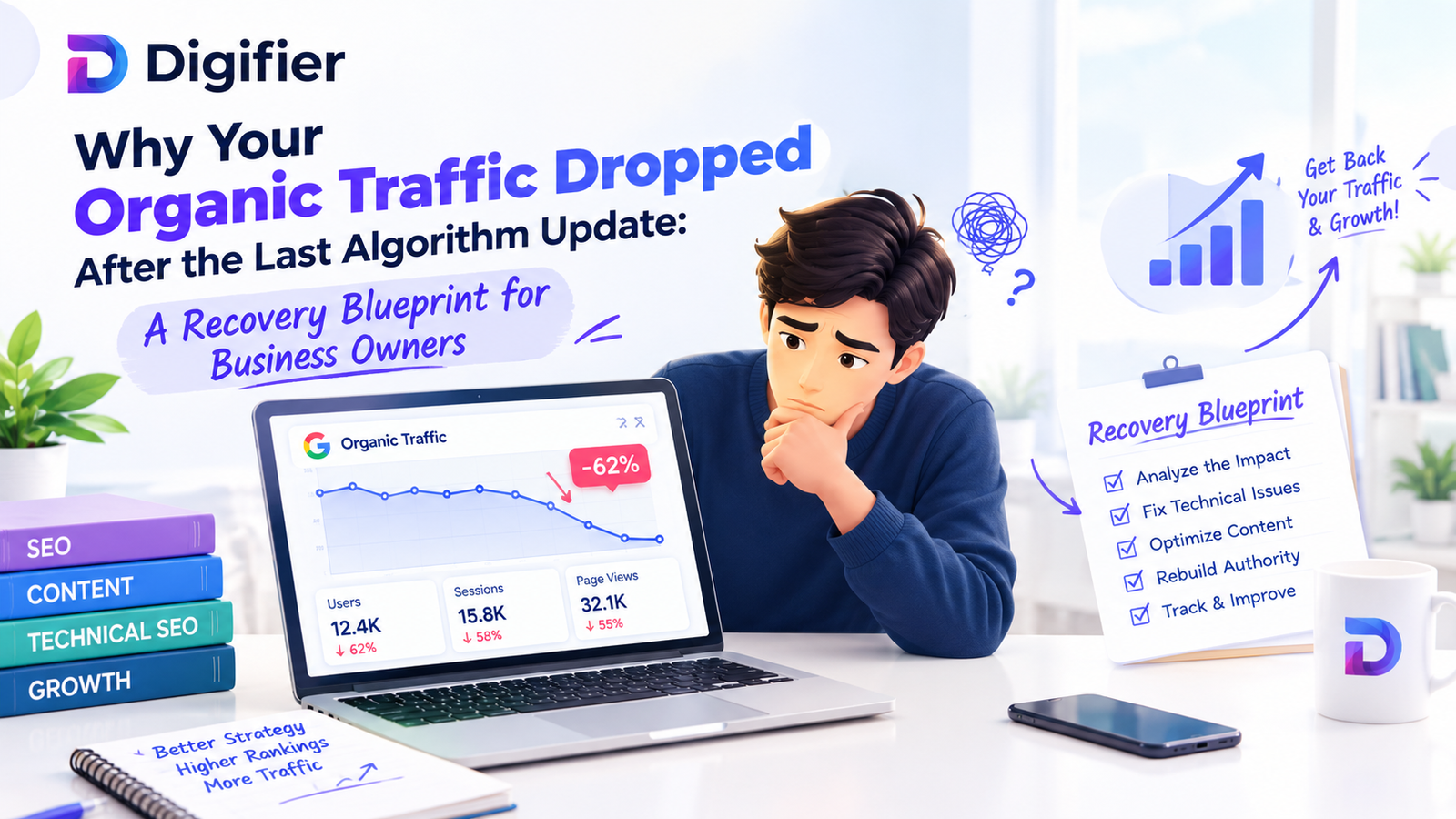
Why Your Organic Traffic Dropped After the Last Algorithm Update: A Recovery Blueprint
Experiencing a sudden decrease in search engine visibility after a major search deployment can be alarming for any business executive. When keyword positions fluctuate and organic sessions decline overnight, operational leaders often struggle to pinpoint whether the issue stems from systemic algorithm changes, technical flaws, or shifting user expectations. Navigating an organic traffic drop SEO recovery requires a methodical diagnostic approach rather than emotional or reactive site modifications.
Modern search engines continuously refine their evaluating systems to prioritize helpful, authoritative, and user-centric content. When core updates roll out, websites that rely on outdated optimization tactics, shallow content, or weak site structures often experience noticeable drops in search presence. Understanding why these adjustments occur—and establishing a structured recovery roadmap—is essential for reclaiming lost traffic and building lasting search resilience.
Direct Answer: Organic traffic drops after search updates usually occur because automated systems re-evaluate how well your pages satisfy search intent, demonstrate experience and expertise, or meet technical efficiency standards relative to competing websites. Recovery requires isolating affected page templates, evaluating content helpfulness against quality guidelines, resolving technical bottlenecks, and systematically upgrading page value rather than making hasty site-wide changes.
Table of Contents
- Diagnosing Traffic Loss: Broad Updates vs. Technical Issues
- Primary Drivers of Post-Update Search Visibility Drops
- A Strategic Framework for Organic Traffic Drop SEO Recovery
- Algorithm Impact Diagnostic Matrix
- Building Long-Term Search Authority and Resilience
Diagnosing Traffic Loss: Broad Updates vs. Technical Issues
Before executing fixes, business owners must determine whether the decline was caused by a broad core update or an isolated technical error. A common mistake is assuming that every traffic reduction stems directly from an algorithm penalty. Often, tracking misconfigurations, accidental indexation blocks, or server downtime coincide with documented search deployments, creating confusing signals.
To separate correlation from causation, analyze analytics data across granular dimensions. Examine traffic patterns by landing page group, device type, geographic location, and specific search queries. Broad algorithm updates typically impact specific content categories or page types across an entire domain, whereas technical issues tend to cause sudden, sharp drops isolated to specific URL subdirectories or template structures.
- Check Analytics Verification: Ensure tracking codes remain fully functional and were not stripped during recent web updates or tag updates.
- Isolate Organic Channels: Confirm whether the decrease is unique to unpaid search channels or reflected across direct, referral, and paid mediums.
- Cross-Reference Official Logs: Map the exact timeline of your traffic decline against officially confirmed search updates and tracking tools.
Primary Drivers of Post-Update Search Visibility Drops
When search algorithms undergo major evaluations, they recalibrate how site characteristics are weighed across millions of index entries. Understanding these core evaluation pillars helps pinpoint why certain URLs lost position while competitors gained ground.
Unfulfilled Search Intent and Thin Information Value
Search engines increasingly reward pages that offer immediate, comprehensive answers backed by unique insights. Content that merely rephrases top-ranking results without adding distinct perspective, practical experience, or practical value frequently loses ranking position during core updates. If a user visits a page and must return to search results to find a complete answer, systems mark that content as suboptimal.
Weak Experience, Expertise, Authoritativeness, and Trust (E-E-A-T)
Search evaluators place heavy emphasis on trust signals. Sites featuring unverified claims, missing author credentials, unclear editorial policies, or aggressive ad layouts often struggle after update rollouts. Building verifiable expertise requires real-world insights, clear sourcing, transparent company information, and natural external citations from recognized industry platforms.
Technical Crawlability Bottlenecks and Structural Deficits
Even high-quality content can underperform if search bots encounter technical obstacles while crawling and indexing. Complex site architecture, excessive redirect chains, duplicate content loops, slow response times, and poor mobile rendering degrade overall site health. When search engines re-evaluate web domains, underlying technical liabilities can lower internal scoring thresholds.
In cases where performance issues stem from legacy code, bloated page templates, or obsolete frameworks, comprehensive technical remediation becomes necessary. Organizations seeking structural remediation often rely on tailored website rebuilding services to modernize underlying site architecture and restore search engine accessibility.
A Strategic Framework for Organic Traffic Drop SEO Recovery
Recovering lost search rankings requires a systematic process rather than quick, scattered tweaks. Following a structured multi-phase plan allows business owners to methodically rebuild organic performance.
- Perform a Query and Page Impact Audit: Export search console performance metrics to identify which specific URLs and queries suffered the largest traffic declines. Categorize these URLs by template type, topic, and user intent.
- Evaluate Top-Ranking Competitors: Analyze the pages that replaced your site in top positions. Observe their layout, content depth, interactive elements, mobile experience, and how directly they satisfy the search query.
- Prune or Consolidate Low-Value Content: Eliminate thin, outdated, or redundant pages that dilute overall domain quality. Merge overlapping pages into single, comprehensive resources that answer queries thoroughly.
- Upgrade Page Quality and Experience Signals: Refresh underperforming pages with firsthand expert insights, updated statistics, clear visual headings, direct summaries, and clear content structures.
- Resolve Technical and Architecture Bottlenecks: Fix indexation directives, streamline internal linking structures, clean up broken links, and ensure seamless mobile usability across all major device types.
Implementing these fixes systematically helps search engines recognize domain quality improvements during subsequent index updates. Organizations seeking expert guidance during recovery can partner with professional providers to implement data-backed professional SEO services that align technical execution with modern search requirements.
Building Long-Term Search Authority and Resilience
Recovering from an algorithm update is not merely about reversing past losses; it is about establishing a higher baseline of content quality and technical performance. Businesses that successfully rebound shift their strategy from short-term optimization tactics to sustainable, user-focused digital growth.
Building sustainable search visibility requires aligning technical foundation, site performance, and brand authority. When evaluating long-term strategies, Digifier Web Technologies LLP helps businesses analyze search metrics, diagnose technical obstacles, and implement structured recovery plans aligned with ongoing search engine standards.
Focusing on audience needs, maintaining clean code standards, and conducting periodic audits ensures your site remains resilient when future search updates occur.
Conclusion
Experiencing an unexpected traffic decline can be challenging, but it also presents a clear opportunity to modernize and strengthen your digital platform. By systematically auditing affected pages, upgrading content quality, aligning with user intent, and resolving underlying technical bottlenecks, business owners can execute an effective organic traffic drop SEO recovery plan.
Rather than making impulsive changes, focus on data-backed, high-impact improvements. A commitment to technical performance, domain authority, and comprehensive user value ensures long-term search stability and growth.