


Is Your Outdated Business Website Losing Customers to Competitors? When to Stop Fixing and Start Rebuilding
A business website serves as the primary digital store; when it begins to show subtle signs of age, the financial consequences can be immediate. Many decision-makers attempt to stretch the lifespan of a legacy platform by applying incremental updates, design tweaks, and plugin patches. While minor adjustments can temporarily address visual flaws, repeated superficial fixes rarely resolve deeper architectural limitations, sluggish performance, or poor responsive rendering.
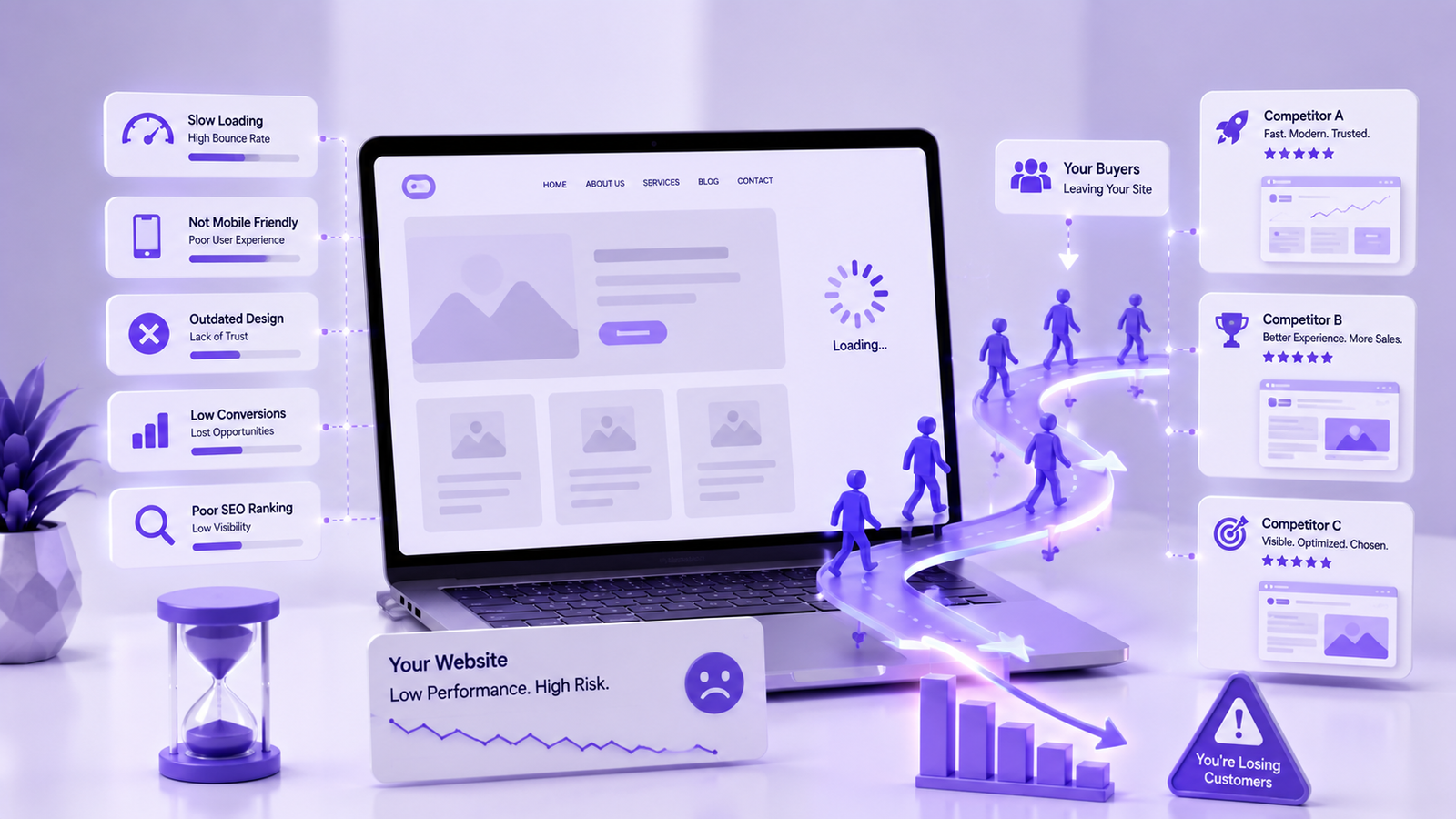
When prospective clients encounter slow load times, broken forms, or an uninspired user interface, they rarely reach out to complain. Instead, they quietly navigate away to a competitor whose digital presence reflects current standards of professionalism and ease. Recognizing when to stop applying temporary fixes and shift toward structured website rebuilding services for businesses is an essential operational decision for maintaining digital market share.
Direct Answer: A business should transition from patching to rebuilding when core code technical debt, slow loading speeds, poor mobile responsiveness, or inflexible content structures begin driving potential customers away. While incremental updates fix minor bugs, a complete website rebuild addresses fundamental user experience flaws, updates underlying security frameworks, and aligns your digital storefront with modern conversion goals.
Table of Contents
- The Real Costs of Maintaining a Legacy Website
- Clear Signs It is Time to Rebuild Your Website
- Comparing Quick Patches with a Complete Rebuild
- Strategic Business Advantages of Modernizing Web Architecture
- How Digifier Web Technologies LLP Approaches Website Modernization
- Key Steps to Rebuild Without Losing Existing Organic Traffic
The Real Costs of Maintaining a Legacy Website
Continuing to run an aging digital framework introduces subtle friction across marketing efforts, sales workflows, and overall brand reputation. Over time, code bases accumulate technical debt—unorganized updates, obsolete plugins, and deprecated scripts that slow down page loading speeds and increase vulnerability risks.
When decision-makers evaluate maintenance expenses purely through a short-term lens, patching seems economical. However, ongoing maintenance of unstable software frequently results in higher long-term expenditure than a targeted rebuild. Developer hours spent hunting down recurring layout glitches, fixing database errors, or attempting to force modern marketing integrations onto outdated software frameworks accumulate rapidly.
- Diminished User Conversion: Frustrating navigation, hard-to-read fonts, or poorly positioned calls-to-action directly lower conversion rates.
- Integration Bottlenecks: Legacy platforms struggle to sync efficiently with modern CRM tools, automation software, or customer support suites.
- Evolving Search Engine Standards: Modern search engines prioritize technical efficiency, mobile performance, and user accessibility standards that older builds struggle to satisfy.
Clear Signs It is Time to Rebuild Your Website
Knowing when to shift from basic routine updates to structural rebuilding requires reviewing specific performance indicators. When multiple operational friction points align, structural intervention becomes necessary.
1. Compromised Mobile Usability
Mobile visitors represent a major share of modern digital traffic. Older sites designed before standard mobile-responsive frameworks were established often rely on desktop layouts shrunk down to fit smaller display areas. If visitors must zoom in, scroll horizontally, or struggle to select touch-based navigation menus, mobile engagement will decline sharply.
2. Persistent Speed and Performance Bottlenecks
Page performance relies heavily on modern code structure, optimized asset delivery, and efficient server communication. When an existing platform has been patched repeatedly with third-party extensions, performance degrades. Optimization plugins can only optimize so much when the underlying theme structure remains heavy and unoptimized.
3. Brand Misalignment and Inflexible Content Controls
As commercial offerings evolve, existing web pages should adapt seamlessly. If simple updates to service messaging, team pages, or promotional banners require manual code updates from a specialized developer, administrative costs rise unnecessarily. A modern platform provides intuitive content administration tools designed for agility.
Strategic Business Advantages of Modernizing Web Architecture
Rebuilding a website is far more than a visual refresh—it provides an opportunity to update how a company captures, nurtures, and converts prospective interest into practical commercial outcomes.
A complete technological reset allows businesses to rebuild search visibility from the ground up. Integrating structured metadata, clean URL hierarchies, fast semantic asset delivery, and targeted professional SEO services ensures search engines crawl and evaluate your business pages clearly.
- Optimized Conversion Pathways: Designing clear navigation guides visitors naturally toward contact forms, resource scheduling, or product catalogs without unnecessary steps.
- Enhanced Technical Security: Modern web rebuilding eliminates legacy security vulnerabilities by implementing current encryption standard frameworks and reliable authentication setups.
- Future-Ready Infrastructure: Modern web code standards allow for effortless integration with emerging tools, such as custom operational modules or internal business dashboards.
How Digifier Web Technologies LLP Approaches Website Modernization
Successful digital transformation requires a structured methodology that prioritizes measurable performance over subjective design choices. Organizations evaluating a complete digital upgrade benefit from standard engineering principles that balance visual execution with solid backend stability.
Businesses evaluating this transition should consider how technical execution, user intent analysis, and system scalability operate together. Digifier Web Technologies LLP delivers structured web engineering practices designed to transform legacy platforms into performant digital assets tailored to long-term business strategy.
Key Steps to Rebuild Without Losing Existing Organic Traffic
A major concern during any digital platform rebuild is preserving existing organic search traffic and established keyword rankings. Without technical oversight, restructuring content URLs or modifying site architecture can temporarily disrupt organic discovery.
- Conduct a Comprehensive Content Audit: Map every existing indexed page before altering site structure to protect valuable ranking assets.
- Implement Precise 301 Redirect Mapping: Ensure old URLs redirect automatically to their exact modern counterparts, preserving link equity and preventing user errors.
- Preserve Essential On-Page Metadata: Maintain high-performing title structures, page headers, and primary content themes while improving visual layout execution.
- Validate Post-Launch Technical Health: Run thorough post-deployment audits to catch broken links, check indexing directives, and monitor performance immediately following deployment.
Modernizing Your Digital Front Door for Sustainable Growth
Continuing to rely on temporary patches for an aging site often creates hidden costs in lost engagement, reduced conversion potential, and elevated technical debt. While simple maintenance serves a purpose early on, a growth-oriented company eventually reaches a point where structural rebuilds become necessary to maintain a competitive digital edge.
Investing in comprehensive website rebuilding services for businesses provides an opportunity to align modern visual layout with reliable, secure web architecture. Moving from short-term fixes to a clean digital platform ensures your online presence active supports user trust, acquisition goals, and operational growth.