

How to Stop Losing Customers to Competitors with Faster Loading Times and Custom Web Development
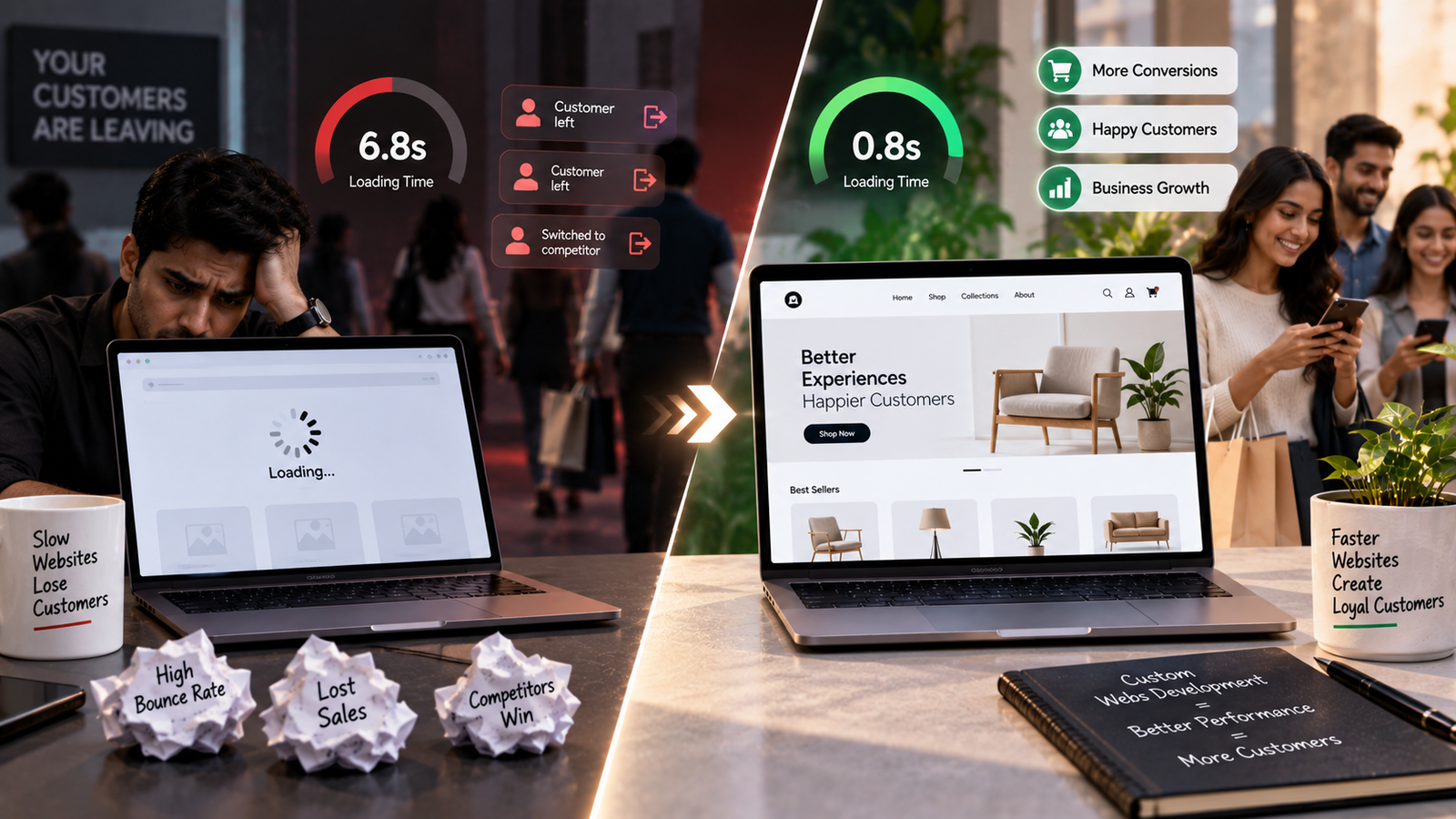
In a modern digital marketplace, user impatience is at an all-time high. When a prospective client clicks on your website, they expect near-instant access to your offerings, information, and messaging. If your pages hesitate, lag, or stutter during load time, visitors will not wait—they will simply return to search results and choose a competitor whose platform responds immediately.
While many organizations attempt to resolve performance issues with surface-level optimization plugins or lightweight caching scripts, these temporary fixes rarely address core architectural flaws. Strategic growth requires a robust digital foundation. By leveraging tailored custom web development services, businesses can eliminate backend bloat, streamline page rendering, and deliver an exceptionally fast user experience that preserves prospective sales and builds long-term brand authority.
Direct Answer: Businesses can stop losing customers to faster competitors by replacing bloated, template-heavy platforms with custom web development built on clean code architecture. Custom engineering strips away unnecessary scripts, optimizes database interactions, and tailors server responses to ensure ultra-fast page loading times that retain visitor interest and maximize digital conversions.
Table of Contents
- The Hidden Business Cost of Slow Page Performance
- Why Off-the-Shelf Templates Fail Speed Expectations
- How Custom Web Development Services Eliminate Speed Bottlenecks
- Core Strategies for Engineering High-Speed Websites
- Template Builders vs. Custom Web Architecture
- Aligning Technical Performance with Business Revenue
- Conclusion: Securing Your Competitive Edge
The Hidden Business Cost of Slow Page Performance
When a website takes too long to render, the consequences extend far beyond minor technical inconvenience. Slow loading times create immediate friction, frustrating potential buyers before they even have an opportunity to review your value proposition. In highly competitive industries, visitors rarely give a platform a second chance when an alternative solution is only a search query away.
Site performance directly influences how users perceive your brand’s credibility and reliability. A rapid, fluid web interface communicates professionalism, structural attention to detail, and operational efficiency. Conversely, sluggish navigation signals outdated infrastructure, subtly undermining trust and prompting prospective clients to migrate directly toward your industry rivals.
- Increased Immediate Abandonment: Visitors abandon registration or purchasing flows at the first sign of latency.
- Diminished Conversion Potential: Friction during page switches reduces overall interactive engagement and inquiry submissions.
- Eroded Organic Visibility: Modern search engines penalize platforms that exhibit poor performance metrics and slow responsiveness.
- Negative Brand Perception: Technical lags project an unpolished image, making marketing efforts less effective.
Why Off-the-Shelf Templates Fail Speed Expectations
Many organizations rely on generic page builders or pre-fabricated theme templates during early business stages. While these tools offer quick deployment, they are engineered to accommodate thousands of different potential use cases. As a result, they come loaded with massive CSS libraries, excessive JavaScript frameworks, and unneeded functionality that executes regardless of whether your site actually uses it.
As commercial demands grow, businesses continuously stack third-party plugins onto these existing templates to add features like analytics, forms, popups, and marketing widgets. Each additional integration introduces compounding external asset requests, database overhead, and script blocking. Over time, this leads to severe performance degradation that third-party caching tools simply cannot resolve.
The Accumulation of Digital Bloat
Template-driven sites suffer from render-blocking resources. When a browser requests a page, it must download, process, and execute hundreds of lines of non-critical code before displaying primary content to the screen. This operational delay directly drives visitors away, forcing growing businesses to consider strategic technical upgrades or complete digital overhauls.
How Custom Web Development Services Eliminate Speed Bottlenecks
Transitioning to specialized custom web development services shifts your digital infrastructure from generic, multi-purpose software to an efficient, purpose-built asset. Instead of attempting to hide structural inefficiencies behind temporary performance patches, custom engineering designs every line of code specifically for your business operational workflows.
By writing clean HTML, modular CSS, and targeted JavaScript, engineering teams build platforms that request only the exact assets required for a specific page view. This lean structural approach reduces payload size, minimizes database lookups, and ensures near-instantaneous browser execution.
For modern digital brands seeking to reclaim lost market share, working with experienced teams like Digifier Web Technologies LLP ensures that structural speed, user journey optimization, and reliable technical execution work in perfect harmony.
Core Strategies for Engineering High-Speed Websites
Achieving elite loading speed requires a multi-layered technical strategy that addresses both front-end asset delivery and server-side performance. Below are the core development methodologies utilized to maximize responsive speed:
- Lean Front-End Architecture: Custom web engineering builds lightweight visual elements without heavy external dependencies, allowing browsers to render layout structures instantaneously.
- Advanced Asset Optimization: Images, vectors, and font files are dynamically formatted, compressed, and served using modern next-generation formats and responsive asset loaders.
- Optimized Database Queries: Custom backends structure data queries efficiently, ensuring that complex dynamic pages retrieve content from servers without operational lag.
- Strategic Caching and Edge Delivery: Implementing content delivery networks (CDNs) and server-side caching ensures content is served from locations physically closest to the end user.
Organizations dealing with legacy systems often require comprehensive initiatives to rebuild an existing website from the ground up, eliminating deep-seated technical debt and establishing a high-performing digital baseline.
Aligning Technical Performance with Business Revenue
Speed is not merely a technical performance metric; it is a primary driver of digital business growth. When prospective clients experience seamless, instant interaction across your platform, the visual transition feels natural and engaging. This lack of resistance builds immediate trust, allowing visitors to focus entirely on your value proposition rather than fighting slow interfaces.
Furthermore, search platforms prioritize user experience metrics as core ranking criteria. Fast-loading websites with minimal layout shifts enjoy better organic indexation, enhanced keyword performance, and increased visibility. By pairing performance engineering with targeted search engine optimization services, modern enterprises establish a significant competitive advantage over slower industry competitors.
Conclusion: Securing Your Competitive Edge
Losing potential clients to market rivals due to preventable technical latency is an avoidable operational risk. While temporary caching plugins offer short-term relief, long-term market dominance requires a commitment to clean digital infrastructure.
By investing in professional custom web development services, businesses eliminate code bloat, protect user engagement, and create an exceptionally responsive digital environment. Transitioning to a clean, custom architecture ensures that every visitor experiences your brand at its best, keeping prospective buyers engaged and driving steady revenue growth.