

Custom Software vs Off-the-Shelf ERP: Which Choice is Stunting Your Business Growth?
As modern enterprises expand, operational workflows inevitably become more complex. Business leaders facing rapid growth eventually reach a critical technology crossroad: should they adapt their operational workflows to fit a standardized off-the-shelf enterprise resource planning (ERP) platform, or build tailored digital tools designed around their proprietary processes? Selecting the wrong business software architecture can subtly cripple operational velocity, create persistent operational bottlenecks, and restrict long-term enterprise value.
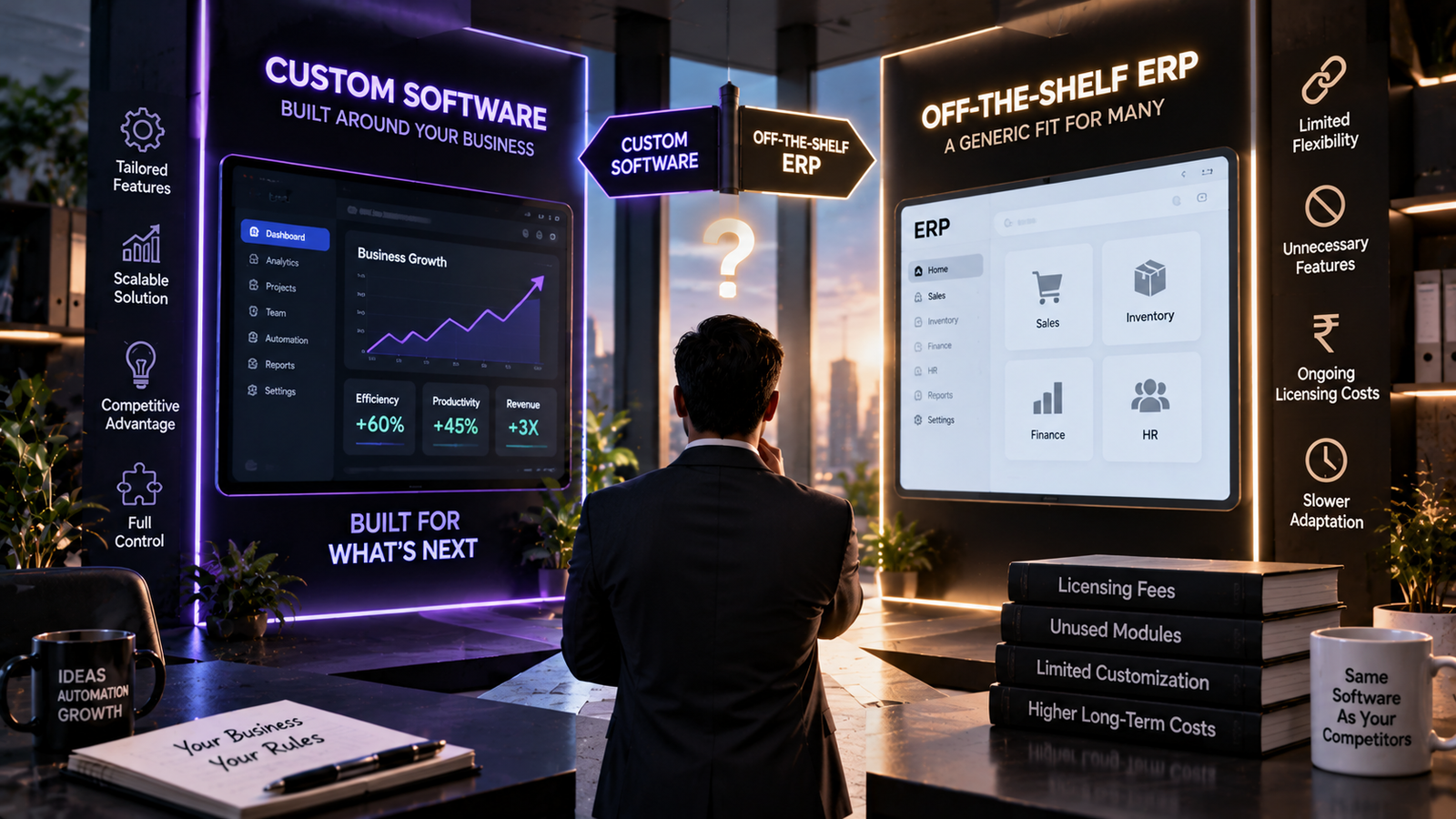
Off-the-shelf ERP platforms offer rapid initial deployment and pre-built operational frameworks. However, forced adherence to rigid platform rules often forces growing organizations into inefficient manual workarounds. Conversely, engaging an experienced custom software development company allows organizations to design software directly around their unique competitive advantage. Understanding how each approach impacts operational flexibility, recurring overhead, and long-term scalability is essential for ensuring your digital infrastructure supports continuous growth rather than stunting it.
Direct Strategic Answer: Off-the-shelf ERP platforms stunt business growth when specialized workflows are forced into rigid, pre-packaged modules, forcing employees to rely on complex manual workarounds. Custom software stunts growth when projects lack clear architectural scope, leading to extended build timelines and excessive maintenance overhead. Growing businesses thrive by building custom business software around core competitive advantages while reserving off-the-shelf software strictly for standard administrative functions.
Table of Contents
- The Core Dilemma: Tailored Agility vs Pre-Packaged Standardization
- How Off-the-Shelf ERP Systems Unintentionally Limit Operational Agility
- The Hidden Risks of Custom Software Development
- Custom Software vs Off-the-Shelf ERP: Comparative Overview
- When Should Your Enterprise Partner with a Custom Software Team?
- Building a Hybrid Ecosystem for Long-Term Scalability
- Decision Framework: Aligning Business Strategy with Technology Choices
The Core Dilemma: Tailored Agility vs Pre-Packaged Standardization
Every commercial software choice represents an operational trade-off. Standardized ERP packages deliver pre-built infrastructure, industry-standard accounting methods, and rapid initial setup. These systems are designed to accommodate broad market requirements, ensuring predictable administrative performance across traditional enterprise functions.
However, generic software rarely captures proprietary operating models. When a business relies on specialized supply chain logic, proprietary pricing engines, or unique client engagement models, rigid off-the-shelf software often creates operational resistance. Organizations must then choose whether to alter their successful operational procedures to fit the software or invest in heavy platform customizations that complicate future software updates.
Tailored operational systems built by specialized developers take the opposite approach. Instead of adapting your organization to software logic, custom tools are engineered specifically around operational workflows. This guarantees seamless internal adoption, eliminates administrative friction, and preserves operational agility as enterprise requirements change over time.
How Off-the-Shelf ERP Systems Unintentionally Limit Operational Agility
While off-the-shelf software platforms promise lower upfront implementation investment, growing enterprises often run into severe integration and agility constraints as operational demands mature.
- Workflow Distortions: Off-the-shelf ERP platforms force teams to adjust operating methods to match pre-programmed database structures, often slowing execution speed across key operations.
- Perpetual Seat Licensing Costs: Scalable enterprise growth leads to escalating recurring user fees, making platform access increasingly expensive as teams expand.
- Integration Bottlenecks: Connecting third-party APIs or external customer portals to legacy ERP backbones frequently requires complex middleware, causing system friction and data synchronization lag.
- Vendor Lock-In: Key operational data remains trapped within proprietary databases, making system migration difficult and keeping your infrastructure roadmap dependent on third-party vendor schedules.
When organizations outgrow off-the-shelf software rules, employees frequently resort to manual spreadsheet tracking outside the primary ERP. This practice undermines data integrity, increases manual entry errors, and eliminates real-time operational visibility across leadership teams.
The Hidden Risks of Custom Software Development
Despite offering distinct competitive advantages, building proprietary software from scratch carries its own strategic and technical responsibilities. Enterprise leadership must evaluate these factors before committing internal resources.
The primary risk in custom development stems from scope creep and inadequate upfront system architecture. Without rigorous product discovery and strategic technical leadership, custom projects risk budget overruns and delayed deployment schedules. Furthermore, custom applications demand ongoing technical ownership, including server maintenance, security patches, and periodic system refactoring.
Working with an established partner like Digifier Web Technologies LLP helps mitigate these build risks through structured engineering practices, well-defined user stories, scalable database designs, and long-term maintenance frameworks tailored to specific business goals.
When Should Your Enterprise Partner with a Custom Software Development Company?
Selecting bespoke software development over pre-packaged tools is a strategic investment that must directly serve company growth objectives. Partnering with a dedicated custom software development company becomes essential when standardized market tools begin impeding daily execution.
Key indicators that your organization requires tailored software solutions include:
- Proprietary Operating Processes: Your primary business value relies on operational workflows that off-the-shelf software platforms cannot support without extensive third-party plugins.
- Data Fragmentation Across Departments: Internal teams rely on multiple disconnected SaaS tools, requiring continuous manual data re-entry and increasing error risks.
- High Volume Scaling Requirements: Recurring user licensing fees on standard software platforms have reached levels where building owned software infrastructure offers better financial performance over time.
- Demanding Customer Interaction Requirements: B2B or B2C clients expect tailored, real-time customer web platforms directly connected to back-office operational engines.
When software architecture directly models operational realities, internal teams work with greater efficiency, manual tasks decrease, and management gains accurate real-time data visibility across all departments.
Building a Hybrid Ecosystem for Long-Term Scalability
The enterprise software decision is rarely an absolute choice between custom development and pre-packaged tools. Many fast-growing companies achieve operational efficiency by implementing a hybrid software model that combines the strengths of both approaches.
In a modern hybrid architecture, standardized off-the-shelf ERP systems manage commoditized, highly regulated business functions like general ledger accounting, payroll processing, and basic human resources. Meanwhile, lightweight, tailored modern applications handle core competitive activities like specialized order processing, dynamic dispatch management, inventory tracking, and client collaboration portals.
Connecting targeted modern application modules to standard accounting systems via secure REST or GraphQL APIs allows growing businesses to combine off-the-shelf platform stability with high-performance custom tools.
Decision Framework: Aligning Business Strategy with Technology Choices
To determine whether pre-packaged software or bespoke software development will best support your organization’s immediate and long-term goals, enterprise leadership teams should run through this quick evaluation framework:
- Identify Core vs. Non-Core Capabilities: Reserve custom engineering investments specifically for functions that directly drive customer value or create operational differentiation.
- Calculate Total Cost of Ownership (TCO): Compare upfront development budgets against multi-year seat licensing fees, upgrade charges, and employee productivity loss from manual workarounds.
- Evaluate Operational Adaptability: Ensure chosen systems accommodate future business model pivots without requiring expensive vendor re-configurations.
- Audit Internal Adoption Capacity: Assess team readiness to adopt tailored tools versus adjusting daily operational habits to fit rigid vendor platforms.
By systematically analyzing core capabilities and long-term cost structures, enterprise leaders can select software solutions that remove growth bottlenecks and streamline modern operations.
Conclusion: Making the Right Software Investment for Long-Term Scale
Choosing between tailored software applications and off-the-shelf ERP platforms directly shapes your organization’s operational trajectory and growth potential. Standard software packages offer convenient setups for routine administrative tasks. However, relying solely on restrictive off-the-shelf systems to manage core, proprietary operating models often creates persistent operational friction and limits scalability.
Partnering with an expert custom software development company allows organizations to build high-performance digital tools aligned directly with their operating strategies. Whether building an end-to-end custom system or expanding an existing ERP through high-impact software extensions, aligning your technology stack with operational workflows remains essential for driving long-term commercial success.