

Google Rankings Dropped After an Algorithm Update? A Strategic SEO Recovery Guide for Growing Businesses
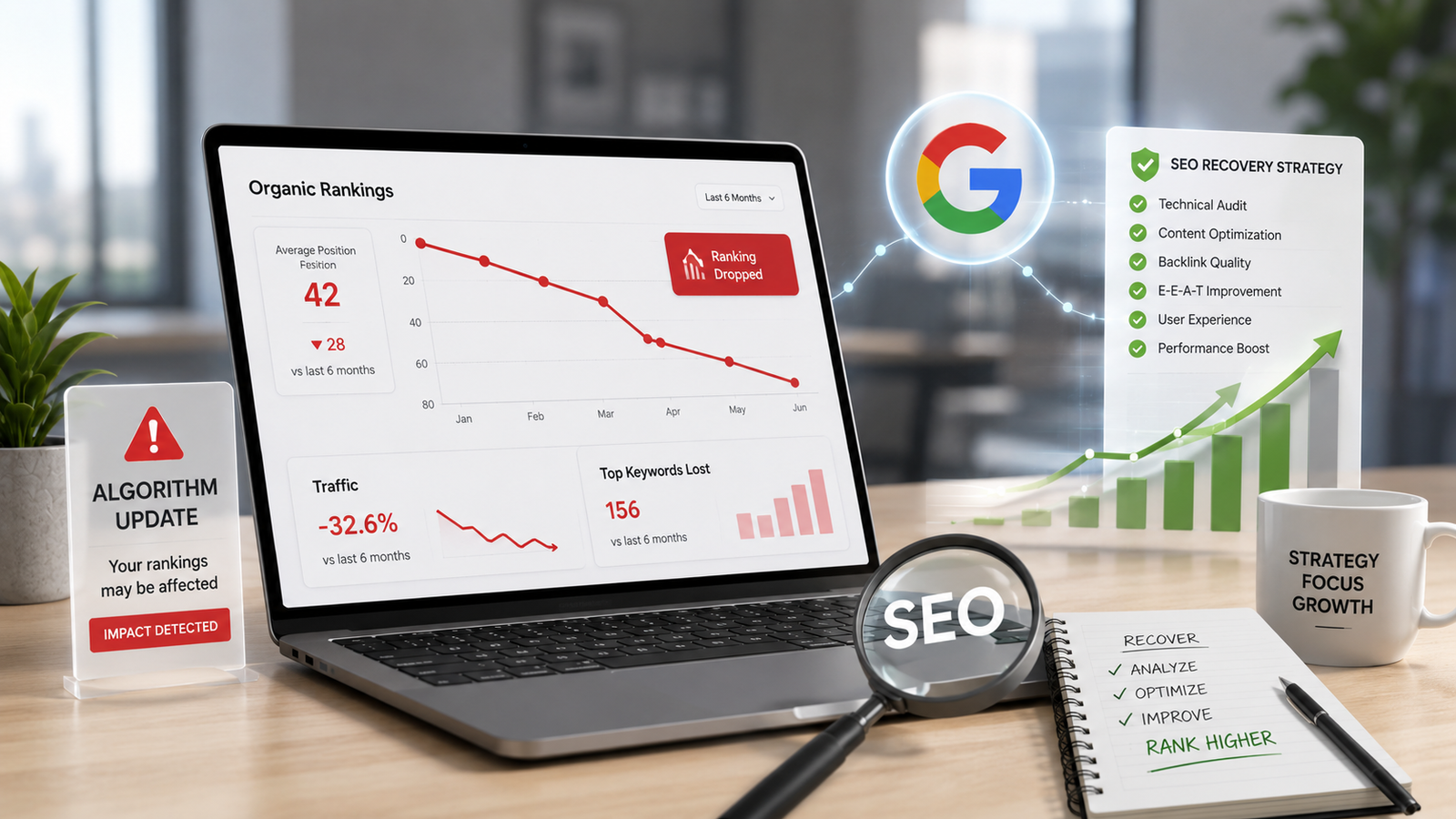
Experiencing a sudden loss of search engine visibility after a major Google algorithm deployment can be alarming for business leaders. When key landing pages lose core keyword rankings overnight, organic traffic slows down, directly affecting qualified inquiries and digital revenue streams. However, search engine updates are not arbitrary punishments; they represent system-wide recalibrations designed to align search results with evolving user expectations and content quality standards.
Recovering from an algorithm update requires a disciplined, analytical strategy rather than reactive troubleshooting. Instead of implementing hasty site-wide changes, growing enterprises must evaluate technical integrity, content helpfulness, and structural relevance against modern search guidelines. Leveraging comprehensive enterprise SEO services helps organizations isolate underlying performance issues, restore organic authority, and build durable digital resilience against future algorithmic shifts.
How to Recover From a Google Algorithm Update Drop: To recover lost search rankings, systematically isolate affected URLs using analytics data, compare impacted pages against newly ranking competitors, eliminate thin or unhelpful content, resolve technical indexing roadblocks, and upgrade overall topical depth. Avoid aggressive disavowal files or quick-fix tactics, focusing instead on long-term helpfulness, user experience, and structural authority.
Table of Contents
- Understanding Why Search Rankings Drop During Google Algorithm Updates
- Diagnosing Organic Traffic Loss: Manual Actions vs. Algorithmic Shift
- Step-by-Step SEO Recovery Process for Impacted Business Websites
- Role of Enterprise SEO Services in Complex Search Recovery
- Comparing Reactive Quick Fixes vs. Strategic SEO Recovery
- Common Pitfalls to Avoid After an Algorithm Ranking Drop
- Rebuilding Long-Term Organic Authority
Understanding Why Search Rankings Drop During Google Algorithm Updates
Google routinely modifies its ranking systems to refine search quality. While minor updates occur continuously without public announcement, core algorithm updates represent comprehensive evaluations of how search systems assess web content globally. Understanding the exact nature of these revisions is essential for developing a sound recovery path.
When a website experiences a sharp decline during a core update, it rarely indicates a technical bug or temporary server disruption. Instead, Google has updated its assessment of relative page value across an entire query category. Content that previously met search guidelines may no longer satisfy elevated standards regarding depth, authoritativeness, or user satisfaction.
Core updates generally focus on several key operational pillars within modern search:
- Content Quality and Depth: Re-evaluating whether content offers original commentary, primary data, comprehensive analysis, or merely regurgitates existing search results.
- Search Intent Alignment: Determining if user expectations have evolved toward direct answer formats, visual demonstrations, or conversational search interfaces.
- Experience, Expertise, Authoritativeness, and Trustworthiness (E-E-A-T): Assessing whether the content creator demonstrates direct firsthand experience and clear topic competence.
- Page Experience and Layout Integrity: Filtering out pages burdened by intrusive advertisements, misleading page layouts, slow rendering, or confusing mobile navigation.
Diagnosing Organic Traffic Loss: Manual Actions vs. Algorithmic Shift
Before taking corrective action, business owners must determine the precise cause of ranking fluctuations. A loss of organic traffic stems from one of three primary sources: a manual action penalty, a technical site breakdown, or an algorithmic ranking adjustment.
A Manual Action occurs when a human reviewer at Google determines that a site violates explicit Webmaster Quality Guidelines. These actions appear directly inside the Google Search Console Security & Manual Actions report. Examples include outbound link schemes, scraped content, or blatant keyword stuffing. Resolving a manual action requires fixing the violation and submitting a formal reconsideration request.
An Algorithmic Adjustment, by contrast, involves no formal notification. The website simply drops in visibility across specific keyword clusters as Google automated systems recalibrate rankings. Recovering from an algorithmic shift requires structural and quality enhancements across affected sections rather than submitting appeals.
Step-by-Step SEO Recovery Process for Impacted Business Websites
Methodical execution is critical during a recovery phase. Hasty, uncoordinated alterations make it difficult to determine which adjustments yielded improvements and which created further issues.
Step 1: Isolate Affected Page Templates and Keyword Clusters
Begin by analyzing performance data across specific date ranges, comparing traffic immediately prior to the update against post-update metrics. Segment performance by page type, such as commercial landing pages, blog publications, resource guides, or service catalogues.
Determining whether traffic drops are site-wide or localized to specific content groups helps narrow down the cause. If only commercial service pages declined while editorial blogs remained steady, the update likely altered how search engines evaluate intent for commercial search queries in your sector.
Step 2: Perform Competitive SERP Intent Gap Analysis
Examine the search engine results pages (SERPs) for target keywords where rankings dropped. Identify which websites gained ground during the update and analyze their page structures, content formats, media usage, and user experience attributes.
- Format Changes: Did search engines shift preference from lengthy informational guides toward transactional landing pages, interactive calculators, or comparison summaries?
- Answer Precision: Do newly promoted pages answer primary user queries faster, placing essential information above the fold?
- Authority Credentials: Are winning competitor pages highlighting clear expert authorship, accredited reviews, or robust transparent sources?
Step 3: Conduct a Thorough Technical Infrastructure Audit
While core updates primarily target content quality and relevance, technical deficiencies amplify visibility drops. Crawl budget inefficiencies, orphaned landing pages, slow page response times, and improper canonical tags prevent search engines from efficiently indexing updated assets. If performance issues stem from legacy code or outdated templates, evaluating professional website rebuilding services can restore underlying page performance and technical crawl efficiency.
Step 4: Refine Content Depth, Structure, and AEO Readiness
Modern search algorithms rely heavily on AI-driven understanding to generate direct summaries and answer user queries. To realign content with modern Answer Engine Optimization (AEO) and search engine standards:
- Eliminate Fluff: Remove generic introductions, repetitive phrasing, and non-essential introductory paragraphs.
- Adopt Clear Structural Headings: Use clear, descriptive headings that directly mirror user questions and underlying search intent.
- Provide Standalone Summary Blocks: Include concise, authoritative 45-to-80-word answer passages beneath key headings to enable seamless information extraction by search engines and AI engines.
- Enhance Visual Hierarchy: Implement styled comparison tables, bulleted process lists, and clear callout sections to improve readability on mobile devices.
Role of Enterprise SEO Services in Complex Search Recovery
For growing mid-market companies and enterprise platforms, recovering lost rankings involves managing intricate site architectures, thousands of URLs, dynamic database assets, and multi-channel marketing campaigns. Attempting manual audits across large web ecosystems often yields incomplete diagnostics.
Partnering with experienced specialists like Digifier Web Technologies LLP provides access to structured SEO frameworks tailored for enterprise scale. Strategic enterprise recovery spans automated log file analysis, semantic keyword mapping, scalable schema integration, and continuous monitoring, ensuring every technical asset contributes to sustainable organic growth.
Comparing Reactive Quick Fixes vs. Strategic SEO Recovery
When search rankings decline, businesses often face a choice between short-term quick fixes and comprehensive strategic adjustments. The comparison below highlights why long-term recovery depends on systematic optimization rather than superficial modifications.
Common Pitfalls to Avoid After an Algorithm Ranking Drop
Reacting emotional or making sweeping, unverified changes during an algorithm rollout often worsens traffic drops. Avoiding critical mistakes preserves existing equity while corrective measures take effect.
- Making Sweeping Site Changes Mid-Update: Core algorithm updates can take several weeks to fully roll out across global data centers. Making massive site edits during an active rollout creates conflicting diagnostic signals.
- Deleting Large Volumes of Content Inappropriately: Deleting entire URL directories without checking historic traffic or backlink profiles can permanently sever valuable internal page equity. Consolidate or rewrite weak content instead of blanket deletions.
- Over-Disavowing Backlinks: Disavowing links indiscriminately can strip legitimate referral equity from your site. Use disavow tools only when clear, manipulative spam link patterns threaten domain health.
- Ignoring Mobile User Experience: Because search engines evaluate websites primarily through mobile crawling systems, desktop-only optimizations fail to resolve visibility drops on mobile platforms.
Rebuilding Long-Term Organic Authority
Recovering search visibility after a Google algorithm update requires patience, structured analysis, and consistent quality execution. While temporary search fluctuations can disrupt short-term traffic, addressing technical deficiencies and content intent gaps yields a stronger, more resilient web presence over time.
By focusing on user-first content standards, clear page architecture, and expert strategic guidance, growing businesses can turn algorithmic challenges into long-term search engine advantage. Modern digital success belongs to organizations that treat search optimization as a continuous business discipline rather than a one-time setup.