

Amazon and Flipkart Listings Live But Not Converting? Hidden Optimization Mistakes Explained
Having active product catalog items on major marketplaces like Amazon and Flipkart is only the first step toward online profitability. Many sellers observe steady impression rates and shopper clicks, yet encounter disappointing sales figures. When product pages attract traffic without producing transactions, the problem rarely lies in product quality alone. Instead, underlying listing errors quietly erode shopper trust and suppress conversion rates.
Diagnosing why visitors leave without purchasing requires evaluating messaging clarity, image structure, pricing presentation, and backend data alignment. Partnering with a specialized marketplace optimization agency helps sellers systematically identify friction points in their listings and transform passive traffic into reliable revenue on leading e-commerce channels.
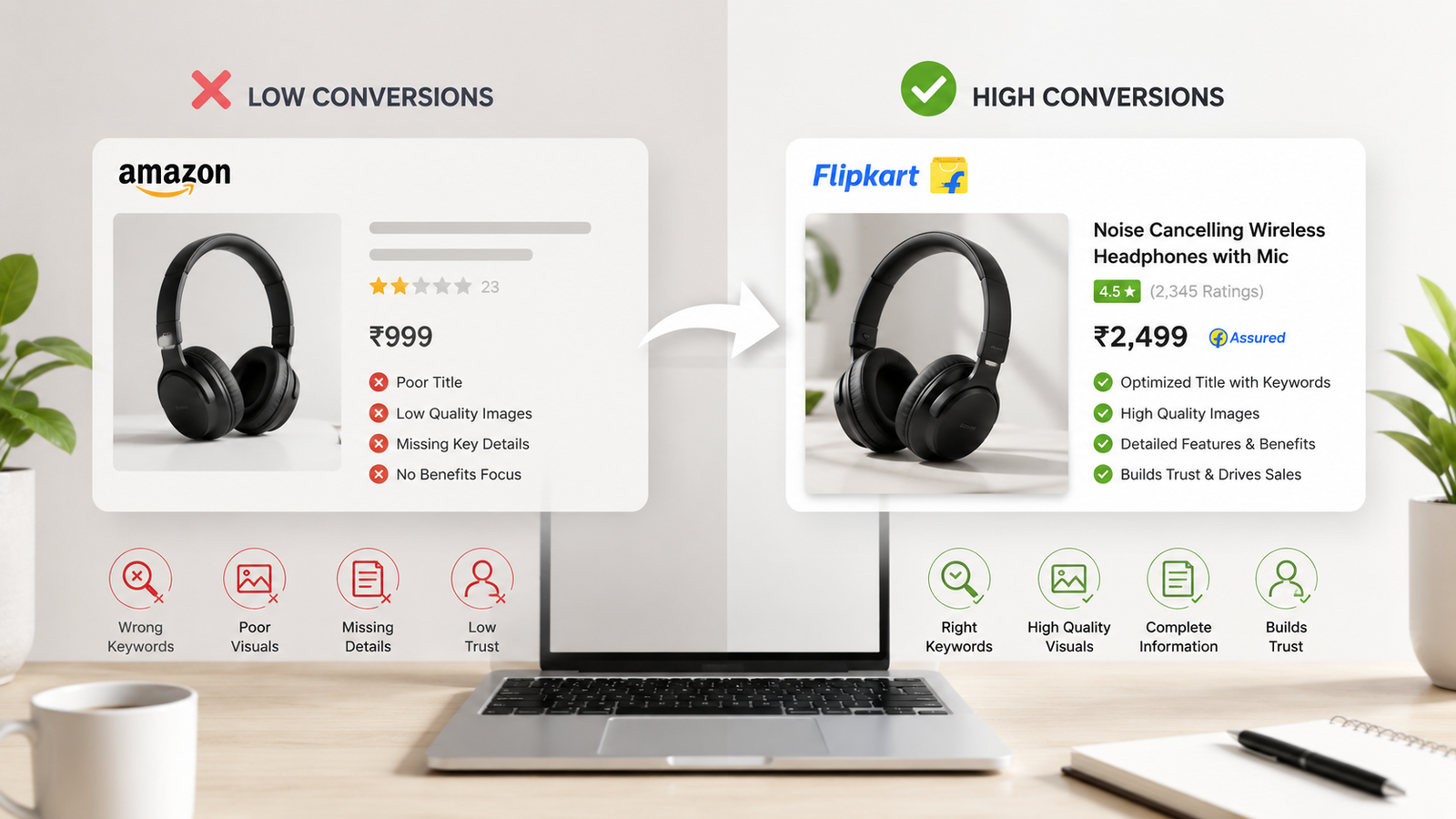
Direct Answer: Amazon and Flipkart listings fail to convert primarily due to search intent mismatches, weak main visuals, non-optimized bullet points, uncompetitive price structuring, and missing Enhanced Brand Content (A+ Content). Fixing these issues requires aligning backend search keywords with buyer expectations, upgrading gallery graphics, demonstrating clear product value, and establishing trust through structured customer review management.
Table of Contents
- Why Marketplace Listings Attract Clicks Without Sales
- Hidden Optimization Mistakes Ruining Your Conversion Rate
- How a Marketplace Optimization Agency Rebuilds Non-Converting Listings
- Key Listing Errors vs Strategic Optimization Solutions
- Actionable Checklist to Audit Your Amazon and Flipkart Stores
- Conclusion: Transforming Marketplace Listings into High-Converting Assets
Why Marketplace Listings Attract Clicks Without Sales
Online shoppers on platforms like Amazon and Flipkart exhibit high buying intent, making low conversion rates particularly concerning. When a user clicks your search result or advertisement, they have already indicated interest in the product category. If they navigate away without adding the item to their cart, a disconnect exists between their expectations and the page presentation.
Marketplace algorithms prioritize listings that deliver satisfying user experiences and high conversion consistency. When visitors bounce off your product detail page quickly, search algorithms interpret the behavior as a sign of low relevance. Over time, this decreases organic ranking, making your advertising spend less efficient and lowering overall market visibility. Understanding the root causes of bounce rates is essential to restoring performance.
Hidden Optimization Mistakes Ruining Your Conversion Rate
Subtle catalog flaws often go unnoticed during initial catalog creation. While basic details like product titles and primary prices might seem complete, missing crucial optimization layers degrades buyer confidence.
1. Misaligned Keyword Targeting and Search Intent
Indexing for broad, high-volume keywords may generate impression metrics, but it frequently attracts unqualified buyers. If your product backend contains broad search terms that do not precisely represent the item’s specific features, size, or material, shoppers will quickly exit upon discovering the mismatch. Precise keyword mapping ensures that traffic reaching your page matches the exact utility of your offer.
2. Subpar Visual Hierarchy and Missing Infographics
Mobile marketplace users rely heavily on visual content rather than reading detailed descriptions. Relying solely on basic studio photos against white backgrounds without contextual infographics, dimensions, or usage demonstrations leads to hesitation. Buyers need visual proof of scale, material quality, and real-world application before committing to a purchase.
3. Generic Feature Bullet Points Lacking Benefit Messaging
Bullet points that list technical specifications without explaining consumer benefits fail to persuade buyers. Rather than simply stating dimensions or raw technical specifications, feature lists should highlight how those specifications solve a practical user problem or deliver convenience.
4. Underutilization of Amazon A+ Content and Flipkart Rich Media
Brand-registered sellers who leave Enhanced Brand Content (EBC) or A+ Content unused miss an opportunity to differentiate themselves from competitors. Rich graphics, comparison charts, and brand narrative sections lower buyer hesitation and answer pre-purchase questions right on the detail page.
How a Marketplace Optimization Agency Rebuilds Non-Converting Listings
Fixing conversion bottlenecks requires an integrated approach that connects data analytics with strategic creative content. A professional agency analyzes buyer session data, search queries, competitor positioning, and customer review sentiments to isolate sales obstacles.
Businesses seeking structured channel growth benefit from comprehensive marketplace services that refine catalog architecture, optimize backend attributes, and elevate visual branding. Digifier Web Technologies LLP delivers tailored marketplace optimization solutions, helping brand owners navigate algorithm shifts, align listing content with intent, and maximize commercial returns across platforms.
Actionable Checklist to Audit Your Amazon and Flipkart Stores
To systematically resolve listing underperformance, conduct a thorough catalog review following a structured diagnostic sequence:
- Review Search Term Relevance: Compare backend search keywords against customer search query reports in Seller Central or Flipkart Seller Hub to eliminate non-converting search terms.
- Optimize Image Sequences: Ensure the primary main image complies with channel background standards while ordering secondary images to tell a complete visual story.
- Upgrade Bullet Formatting: Start each bullet point with a capitalized key benefit tag, followed by clear explanations of how the feature serves the buyer.
- Address Customer Feedback: Analyze common questions and negative reviews on your listings and competitor pages. Address these directly in your A+ Content or visual infographics.
- Activate Promotional Badges: Utilize channel tools like Amazon Coupons or Flipkart Special Price tags to make search results visually distinctive.
Conclusion: Transforming Marketplace Listings into High-Converting Assets
Generating steady marketplace traffic is only valuable when product detail pages actively convert visitors into paying customers. By recognizing hidden optimization errors—such as keyword mismatches, weak image assets, uninformative copy, and underutilized brand tools—sellers can eliminate purchase hesitation and elevate channel profitability.
Addressing these operational gaps demands ongoing monitoring, catalog audits, and clear content strategies. Working with a dedicated marketplace optimization agency ensures your Amazon and Flipkart stores remain competitive, fully compliant with platform updates, and structured for sustainable long-term sales growth.