

Why Your Local Business is Invisible on Google Maps and AI Search: Fixing Broken Local SEO Strategies
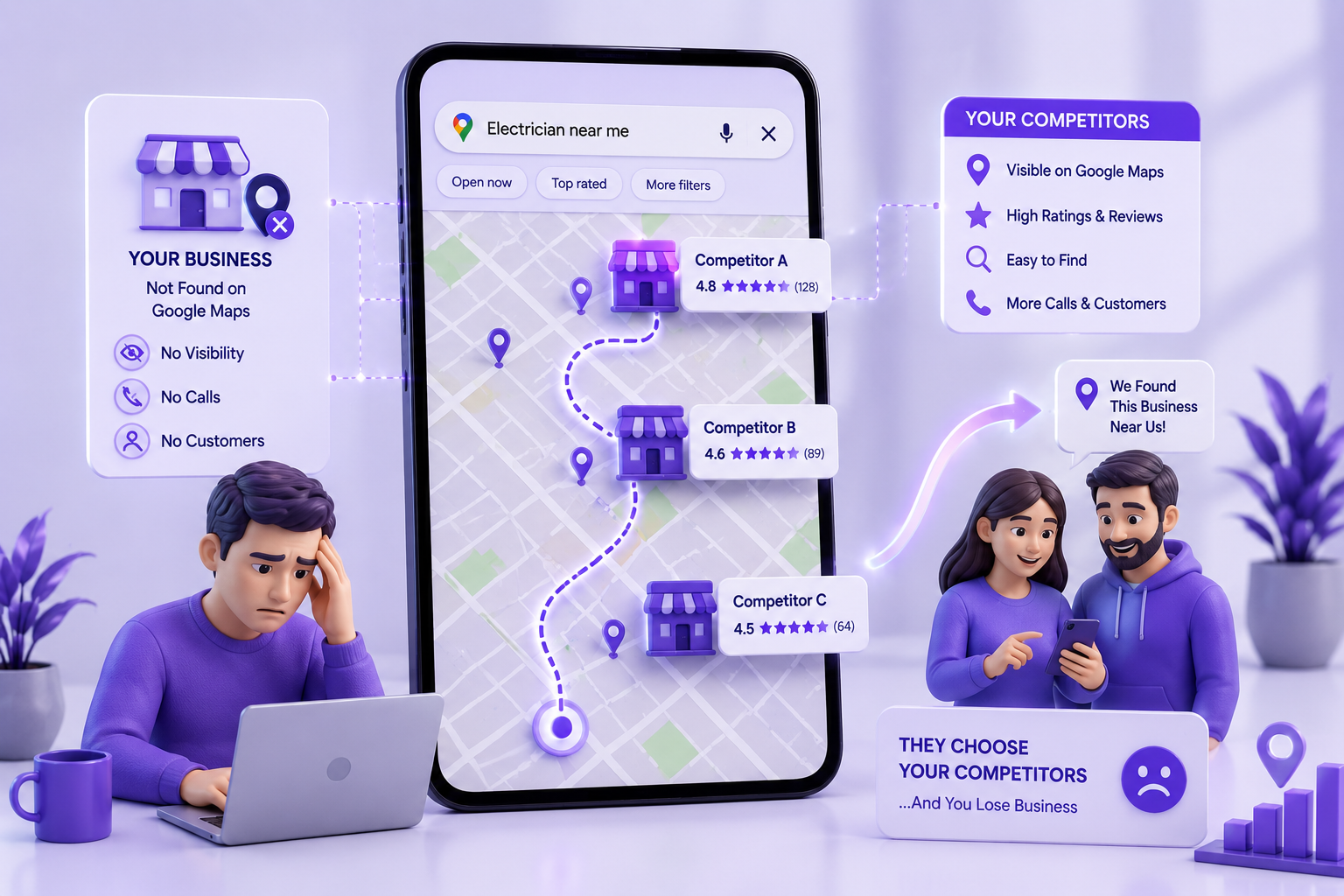
Operating a physical storefront or a local service business without strong search visibility can feel like opening a shop in an empty alleyway. Potential customers nearby actively search for your products or services every minute, yet your business fails to appear in the Google Maps Local Pack, standard organic results, or modern conversational AI search platforms. In many cases, business owners invest time into updating social media or running sporadic ads, while overlooking why their core search presence remains completely flat.
Understanding why your entity remains unseen across search engines and AI engines requires identifying outdated practices. Relying on basic map pins and generic keyword repetition no longer delivers meaningful local exposure. Modern discovery algorithms evaluate structured entity data, real-time citation consistency, context-rich customer feedback, and geo-targeted web content. Implementing tailored local SEO services for small businesses helps rebuild these foundational signals, transforming hidden storefronts into clear, trusted local authorities across both traditional map engines and generative AI tools.
Direct Answer: A local business becomes invisible on Google Maps and AI search when search algorithms lack sufficient trust signals to verify its physical address, operational relevance, and reputation. Common root causes include inconsistent Name, Address, and Phone (NAP) data across directories, unoptimized Google Business Profiles, thin website context, and missing structured data schema that conversational AI engines rely on to summarize top local service providers.
Table of Contents
- Why Local Businesses Hide in Plain Sight on Search Engines and AI Assistants
- The Core Breakdown: Missing Signals, Inconsistent Data, and Silent Penalties
- The New Shift: How Generative AI Search Selects Local Business Recommendations
- Step-by-Step Fixes for Broken Local SEO Strategies
- Key Technical and Structural Elements for Modern Local Search Visibility
- Evaluating Local SEO Services for Small Businesses
- Conclusion: Building Sustainable Local Search Prominence
Why Local Businesses Hide in Plain Sight on Search Engines and AI Assistants
Local search ecosystem design focuses on connecting searchers with immediate, location-relevant solutions. When a consumer queries a service within a specific city or suburb, search engines evaluate three foundational dimensions: proximity, prominence, and relevance. If your strategy fails to explicitly establish all three factors, algorithms bypass your business listing in favor of competitors who present clearer structural signals.
Many small business owners assume that simply claiming a Google Business Profile guarantees regional placement. However, algorithms view a profile as a single data node among hundreds of digital touchpoints. Without cross-referenced validation from regional directories, localized website content, and active user interaction, search bots mark the entity as uncertain. Invisibility is rarely an accident; it is the natural consequence of ambiguous, incomplete, or unverified digital presence.
The Core Breakdown: Missing Signals, Inconsistent Data, and Silent Penalties
Diagnosing local search failure requires examining where traditional optimization breaks down. When key structural signals weaken, search engines lower ranking confidence to protect user experience.
- Inconsistent Name, Address, and Phone (NAP) Details: Slight variations in address formatting, old telephone numbers on third-party aggregators, or conflicting business titles across web platforms create confusion. Search algorithms suppress listings when data integrity appears unreliable.
- Neglected Primary Category Selection: Choosing a broad or inaccurate primary category on your business profile prevents algorithms from correctly matching your listing with high-intent localized search queries.
- Thin or Non-Existent Localized Web Pages: Relying solely on a generic homepage without dedicated local landing pages leaves search crawlers with insufficient textual context regarding your exact service zones.
- Passive Review Management: Failing to generate steady, contextually detailed customer reviews—or leaving reviews without thoughtful owner responses—signals inactivity to modern evaluation models.
- Poor Website User Experience: Slow page loading speeds, non-responsive design on mobile screens, and broken navigation degrade engagement metrics, negatively impacting local rank tracking.
Addressing these structural weaknesses requires systematically auditing every point of brand representation. At Digifier Web Technologies LLP, structured diagnostic workflows help identify and resolve technical roadblocks that prevent local businesses from achieving prominent placement across digital channels.
The New Shift: How Generative AI Search Selects Local Business Recommendations
Search behavior has expanded beyond standard keyword entries inside conventional search boxes. Consumers increasingly rely on AI-driven chat interfaces, answer engines, and generative summaries to discover service providers. AI search tools do not merely return a grid of links; they synthesize unstructured internet data into definitive text recommendations.
Generative AI systems rely heavily on entity recognition and machine-readable context. When a user asks an AI assistant for the most dependable residential plumber or commercial firm nearby, the model scans structured schema markup, sentiment across review sites, industry directories, and conversational mentions. If your business entity lacks structured Schema markup or lacks clear semantically linked local details, conversational engines overlook your company entirely, favoring entities with verifiable digital footprints.
Step-by-Step Fixes for Broken Local SEO Strategies
Transitioning from online invisibility to persistent local authority requires executing a deliberate recovery process. Rebuilding broken local optimization strategies demands methodological updates across several technical layers.
- Audit and Standardize NAP Data Across Ecosystems: Conduct a thorough audit of every external directory listing, social profile, and map application. Correct typos, remove outdated phone numbers, and ensure every record mirrors your official website formatting down to suite numbers.
- Fully Optimize the Google Business Profile: Complete every section within your dashboard. Add accurate operational hours, upload high-resolution geotagged photography, establish core service lists with detailed descriptions, and select appropriate secondary category options.
- Implement Structured LocalBusiness Schema Markup: Integrate JSON-LD structured data directly into your website header. Define your business type, precise geographical coordinates, business hours, price range, and service regions so search engines and AI parsers explicitly recognize your entity.
- Develop Location-Specific Landing Content: Build dedicated, high-quality web pages for each distinct service region you target. Avoid publishing template-driven duplicate pages; instead, provide genuinely helpful content detailing local projects, neighborhood insights, and location-relevant FAQs.
- Systematize Review Acquisition and Response Workflows: Implement proactive follow-up systems encouraging satisfied clients to share real experience feedback. Respond constructively to every review, naturally integrating service terms and geographical indicators into your replies.
Key Technical and Structural Elements for Modern Local Search Visibility
Local optimization relies on balancing multiple technical disciplines. Comparing foundational search requirements against AI-focused engine standards clarifies where modern adjustments are necessary.
Evaluating Local SEO Services for Small Businesses
Resolving local visibility issues requires ongoing maintenance rather than a one-time setup. As local markets become more competitive, small business owners often seek professional partnerships to manage technical updates, citation cleanup, and content strategy execution.
When evaluating professional support, businesses should look for structured, strategy-first methodologies rather than automated batch submissions. Transparent agencies prioritize comprehensive technical auditing, custom local landing page creation, entity schema implementation, and active review management systems. Additionally, ensure that your web design infrastructure fully supports localized performance. Businesses seeking to modernise inefficient web structures can explore dedicated responsive website design solutions to build a strong foundation for organic search growth.
Conclusion: Building Sustainable Local Search Prominence
Local business invisibility on Google Maps and generative AI search is an operational challenge that can be diagnosed and systematically fixed. By resolving broken NAP data, optimizing profile categories, embedding structured schema markup, and continuously acquiring contextual reviews, businesses can transform ambiguous digital footprints into verified, highly visible market authorities.
As search engines and AI assistants continue to refine how they discover local solutions, maintaining accurate entity signals remains critical. Implementing comprehensive local SEO services for small businesses ensures your brand stays visible, competitive, and easily accessible to local consumers when high-intent buying decisions occur.