

Maximizing ROI with AI-Driven Performance Marketing for Startups
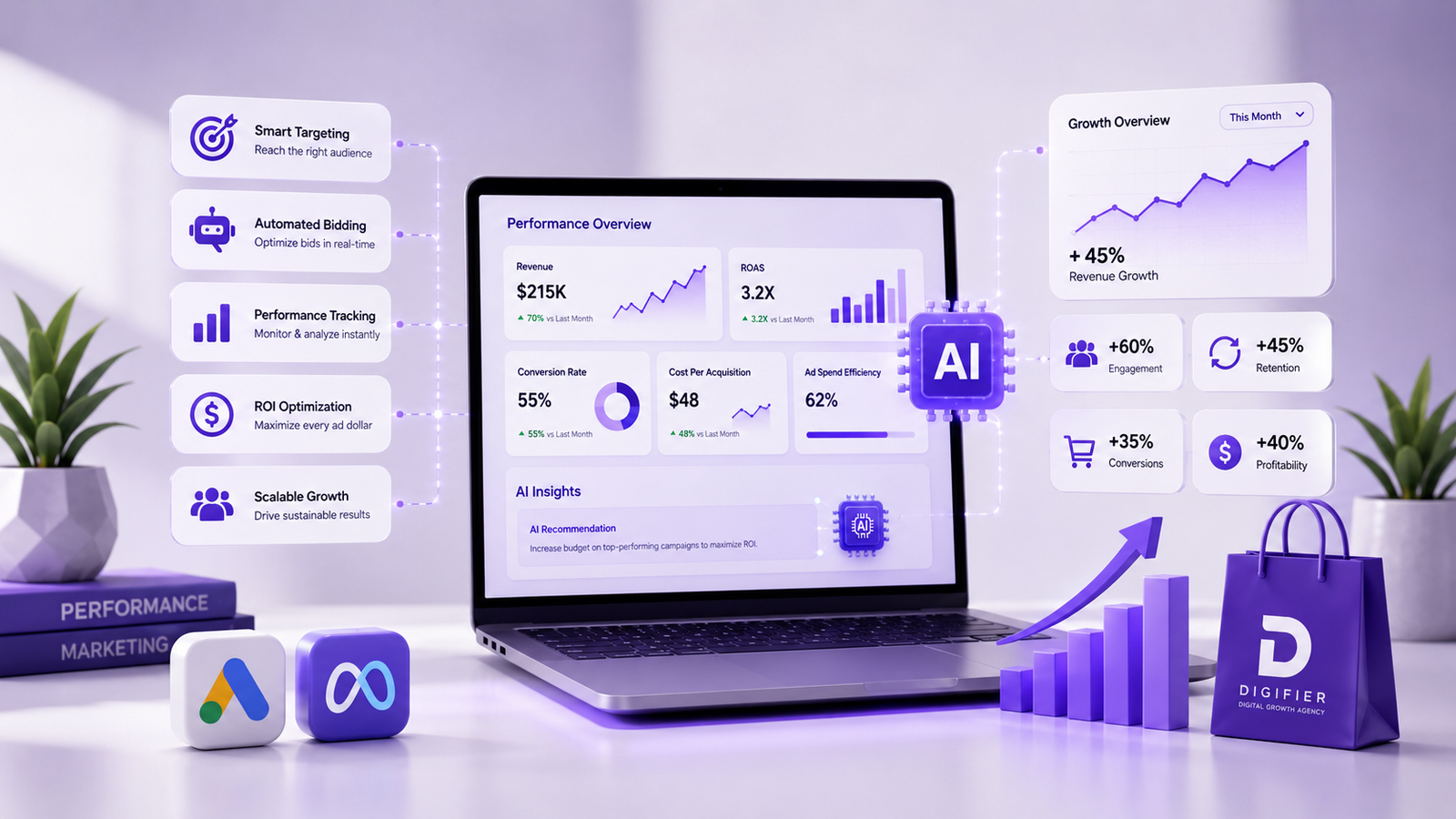
Startups today operate in a high-stakes environment where every marketing dollar must deliver measurable value. The shift toward an AI-driven digital marketing agency model has transformed how emerging brands approach customer acquisition, shifting the focus from broad-spectrum spending to hyper-targeted, high-return initiatives. By leveraging machine learning and predictive analytics, startups can now anticipate market shifts and optimize their advertising spend with unprecedented precision.
Adopting an intelligent approach to performance marketing allows lean teams to automate repetitive bidding processes, personalize content at scale, and identify the most profitable user segments without manual intervention. This data-backed agility is essential for any business aiming to scale sustainably in competitive digital markets.
AI-driven performance marketing maximizes ROI for startups by automating real-time bid adjustments, predicting consumer behavior, and delivering personalized ad experiences. By relying on data-informed decision-making rather than guesswork, startups can reduce wasted ad spend, improve conversion quality, and optimize their overall marketing funnel for efficient, scalable growth.
Table of Contents
- The Role of AI in Performance Marketing
- Precision Targeting and User Acquisition
- Optimizing Ad Spend Through Automation
- Building a Sustainable Growth Strategy
- Choosing the Right Partnership Model
The Role of AI in Performance Marketing
At its core, AI-driven marketing is about eliminating inefficiency. Traditional manual campaign management often fails to keep pace with real-time auction environments, leading to missed opportunities or budget exhaustion on underperforming keywords. Modern AI solutions for businesses now allow for autonomous optimization, where algorithms monitor engagement patterns and adjust bids instantaneously to focus on high-intent prospects.
For startups, this means the ability to experiment across multiple channels without needing a massive data science team. AI tools synthesize vast amounts of user interaction data to predict which creative assets or messaging angles will resonate best, allowing for a more strategic deployment of limited resources.
Precision Targeting and User Acquisition
Effective targeting is the backbone of high-ROI performance marketing. Rather than relying on generic demographic buckets, AI enables behavioral segmentation that evolves with the user. By analyzing past interactions, platforms can identify the precise moment a user is ready to convert, ensuring your ads reach them when they are most likely to take action.
This granular approach also improves the quality of leads generated. When your ads are served to users who match the specific intent profile of your ideal customers, you minimize the bounce rate and increase the likelihood of meaningful engagement. Digifier Web Technologies LLP understands that connecting with the right audience requires a blend of advanced technical implementation and deep insight into the customer journey.
Optimizing Ad Spend Through Automation
Budget management is often the most stressful aspect of early-stage growth. Without automation, startups frequently struggle with “budget leakage,” where funds are lost to low-performing ad sets or irrelevant traffic sources. Automated bidding systems, powered by machine learning, continuously refine themselves based on performance data.
Building a Sustainable Growth Strategy
Sustainability in growth requires moving beyond vanity metrics to focus on customer lifetime value and acquisition costs. By integrating performance data with a cohesive integrated digital marketing strategy, startups ensure that their automated efforts align with broader brand goals. AI tools assist in mapping out the customer journey, identifying drop-off points, and suggesting interventions that keep potential users moving through the conversion funnel.
Choosing the Right Partnership Model
When evaluating external support, startups should look for partners who emphasize transparency and technical competence. A modern, AI-focused marketing agency should be able to explain how their algorithms drive results and how those results map to specific business KPIs. It is not enough to simply have access to tools; the strategic expertise to interpret, act upon, and optimize the data those tools provide is what truly differentiates a scalable marketing operation from one that struggles to stay relevant.
Conclusion
Maximizing ROI for startups is no longer a matter of simply outspending competitors; it is about out-optimizing them through better use of technology and data. By utilizing an AI-driven digital marketing agency, businesses gain access to the kind of predictive capability that was once restricted to large enterprises. From precise audience targeting to automated bid refinement, the integration of artificial intelligence is the most effective way to ensure marketing efforts remain lean, responsive, and profitable. As digital channels become more complex, the ability to rely on data-backed insights will distinguish successful startups from those that are unable to pivot when market conditions change. Embracing this shift now provides the structural foundation required for long-term growth and market resilience.