

Modernizing Legacy E-commerce Platforms: A Guide to High-Conversion Website Rebuilding
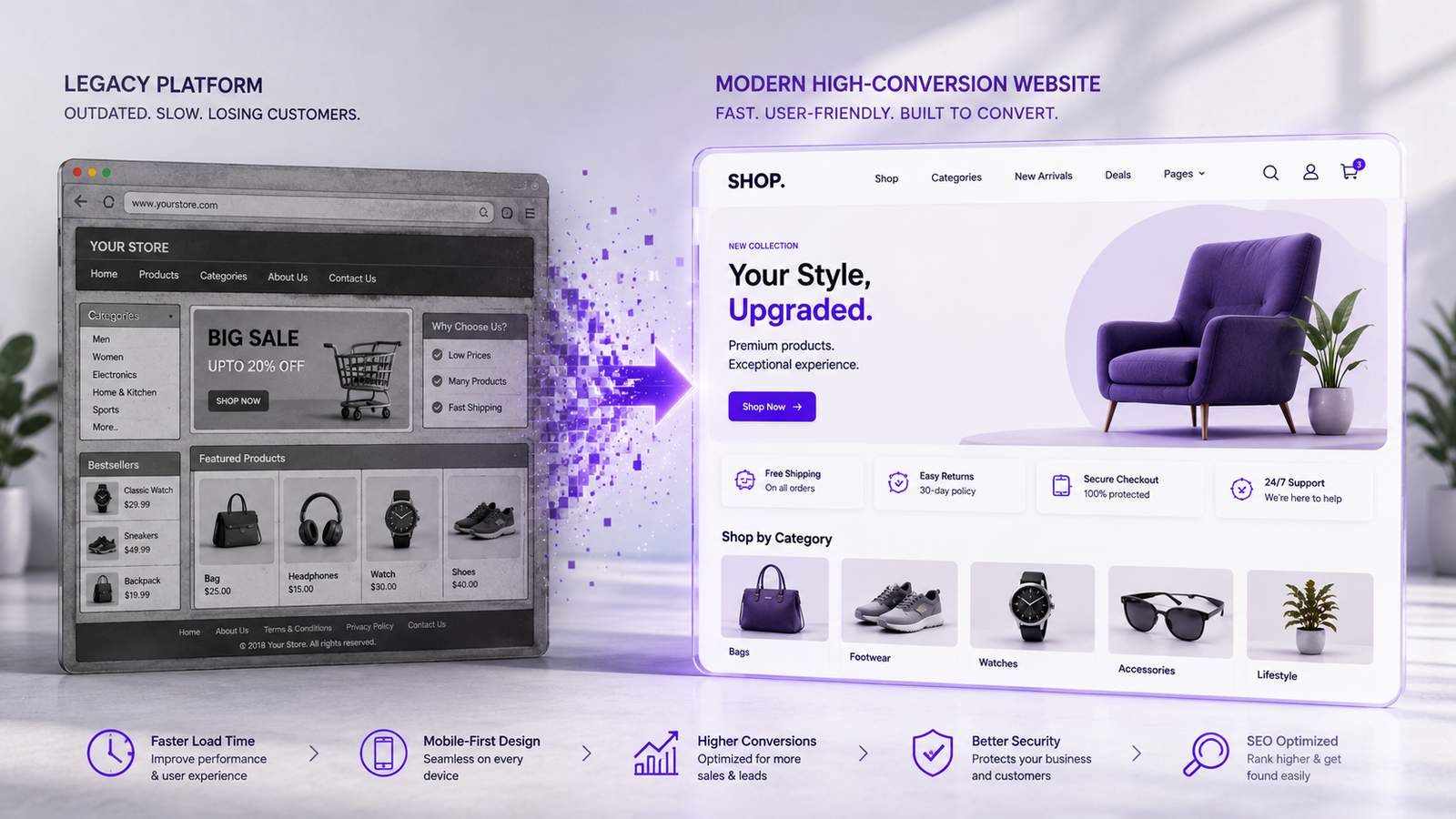
Legacy e-commerce platforms often become a bottleneck for business growth, characterized by slow load times, outdated navigation, and limited mobile capabilities. When your digital storefront fails to meet current user expectations, it directly impacts the bottom line. Utilizing website rebuilding services is a strategic move to restore performance, enhance user experience, and align your online presence with modern standards. A successful transition requires careful planning, from data migration to interface refinement, ensuring that the modernization process supports sustainable growth.
Modernizing a legacy platform involves auditing current performance, selecting a flexible, scalable architecture, and implementing a user-centric design. By focusing on ecommerce website redesign services that prioritize speed, secure checkout flows, and mobile responsiveness, businesses can reduce friction for shoppers, improve search engine visibility, and significantly enhance the overall efficiency of their digital commerce operations.
Table of Contents
- Identifying Signs of a Legacy Platform
- Key Objectives of Modernization
- The Technical Migration Process
- Strategies for High-Conversion Redesign
- Ensuring Long-Term Scalability
Identifying Signs of a Legacy Platform
Recognizing when your site is no longer serving your business is the first step toward effective change. Often, maintenance costs begin to outweigh the benefits of sticking with an old system. If your backend is difficult to update, or if your site struggles to handle modern traffic patterns, the underlying infrastructure may be the primary barrier to your success.
- Inconsistent Mobile Performance: An experience that feels broken or clunky on smaller devices leads to high bounce rates.
- Integration Challenges: Difficulty syncing with modern CRM, inventory management, or payment gateways.
- Poor Loading Speeds: Excessive server requests and unoptimized code structures that frustrate users.
Key Objectives of Modernization
When evaluating ecommerce website redesign services, the focus should extend beyond visual aesthetics. A professional approach involves re-engineering the underlying logic of the store to ensure it aligns with modern consumer behavior. Digifier Web Technologies LLP emphasizes that rebuilding is not just about changing the look; it is about creating a stable, future-ready environment that facilitates seamless transactions.
Effective modernization often aims to improve three critical areas: structural integrity, user trust, and operational agility. By addressing the core technical debt, businesses gain the flexibility to adapt to new market trends without needing a full rebuild every few years.
The Technical Migration Process
Migrating to a new environment is a complex task that demands rigorous attention to detail, particularly regarding database integrity and SEO preservation. Failing to map legacy URLs to the new structure can result in a loss of organic search visibility, making it essential to have a comprehensive technical plan.
- Data Audit: Cataloging existing products, customer profiles, and order histories to determine what needs to be migrated versus archived.
- Architecture Planning: Selecting a platform that supports the specific operational needs of your business, whether that includes custom functionalities or native e-commerce solutions.
- SEO Preservation: Implementing 301 redirects and maintaining metadata integrity to safeguard your existing search rankings.
Strategies for High-Conversion Redesign
A high-conversion website is one that anticipates the user’s intent and minimizes barriers to completion. During the redesign, it is important to declutter the interface and streamline the path to checkout. Simple, intuitive navigation helps users find what they need quickly, which is a fundamental requirement for any competitive online store.
Ensuring Long-Term Scalability
Modernizing your platform is not a one-time project but an investment in future flexibility. Scalability ensures that your store can handle sudden increases in traffic without compromising stability. By utilizing modular, API-driven frameworks, developers can create systems that allow for easier feature additions, such as new payment methods or expanded regional support, as your business grows.
Conclusion
Transitioning away from an aging digital infrastructure is essential for maintaining a competitive edge in today’s market. By investing in professional ecommerce website redesign services, you can transform technical limitations into opportunities for improved performance and user engagement. The process of rebuilding allows for a cleaner code base, a more responsive user experience, and a stronger foundation for long-term scalability. Prioritizing these elements ensures that your business remains capable of meeting current consumer demands while maintaining the flexibility to evolve with future industry standards. A well-planned, expertly executed rebuild turns the burden of legacy maintenance into a catalyst for operational success and sustained growth.