

Enterprise-Grade SEO Strategy for Scaling E-commerce Brands in 2026
As the digital marketplace matures, implementing an enterprise-grade SEO strategy for scaling e-commerce brands in 2026 requires moving beyond basic keyword optimization. Large-scale retail platforms must address technical complexity, architectural agility, and semantic search integration to maintain visibility. Success now relies on a holistic approach that bridges the gap between massive product inventory management and the sophisticated intent of modern search engine users.
Enterprise ecommerce SEO services provide the technical infrastructure and strategic depth required to scale large product catalogues. By prioritizing site architecture, automated content optimization, and search-intent alignment, brands can navigate competitive landscapes in 2026. Effective strategies focus on reducing technical debt while ensuring that every page serves a specific user need in the modern search ecosystem.
Table of Contents
- Architectural Foundations for Large Catalogues
- Optimizing for AI-Driven Search Environments
- Content Strategy and Semantic Relevance
- Technical Performance and User Experience
- Measuring Growth Beyond Organic Traffic
Architectural Foundations for Large Catalogues
For massive e-commerce platforms, the site structure determines how efficiently crawlers index thousands of product pages. A flat architecture—where any product is reachable within a few clicks—remains a gold standard for distributing link equity throughout the site. When brands leverage professional search engine optimization services, they can implement faceted navigation that prevents duplicate content issues while ensuring that category filters are discoverable by search bots.
Optimizing for AI-Driven Search Environments
The rise of AI search engines requires a shift toward structured data and clear, entity-based content. Search algorithms now prioritize websites that explicitly define product attributes, pricing, and availability through Schema markup. This makes your inventory machine-readable and ready for inclusion in AI-generated answers, which will represent a significant share of information discovery in 2026.
Content Strategy and Semantic Relevance
Scaling content for thousands of SKUs is best approached through automated yet human-validated frameworks. Instead of creating generic descriptions, brands should focus on semantic clusters that answer specific user questions about products. Digifier Web Technologies LLP understands that effective e-commerce solutions require content that aligns with the entire buyer journey, from high-level discovery queries to transactional search terms.
Technical Performance and User Experience
Speed and mobile performance are non-negotiable for large stores. As page load times impact both user retention and search rankings, enterprise brands must optimize their underlying code and image delivery systems. A streamlined, responsive frontend ensures that customers have a smooth shopping experience regardless of their device, which ultimately signals trust and reliability to search engines.
Measuring Growth Beyond Organic Traffic
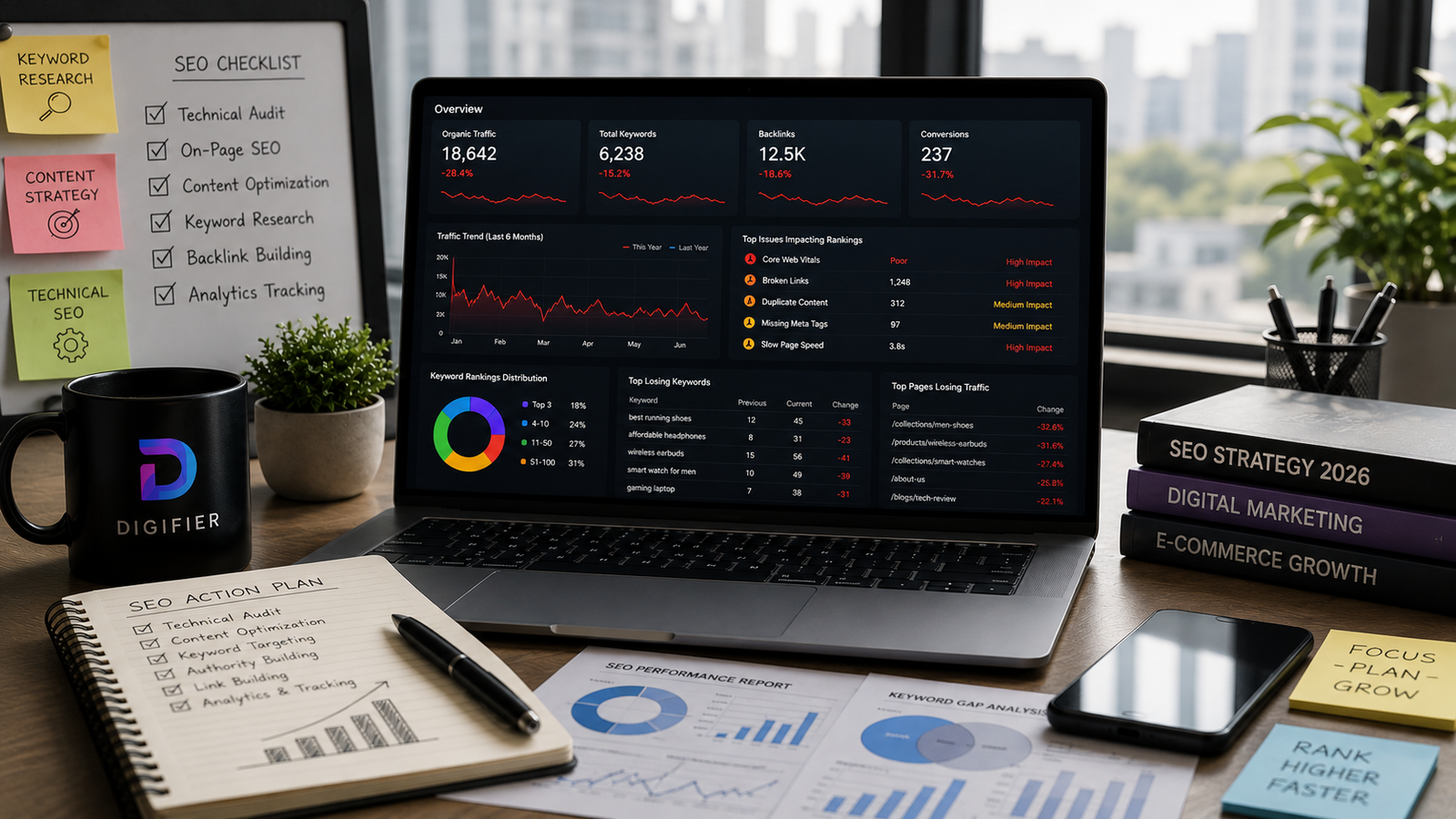
Success metrics in 2026 must look beyond clicks. Enterprise brands should track conversion path efficiency, bounce rates on critical product pages, and the correlation between search visibility and brand authority. By integrating technical health checks into their ongoing strategy, businesses can proactively identify bottlenecks that may hinder scale.
Conclusion
Developing an enterprise-grade SEO strategy for scaling e-commerce brands in 2026 is a long-term commitment to technical quality and semantic clarity. By focusing on site architecture, AI-ready data structures, and user-centric content, brands can future-proof their digital presence against evolving search behaviors. As search engines continue to prioritize accuracy and user satisfaction, the brands that invest in solid foundational practices will naturally sustain their visibility and growth. Choosing to implement professional enterprise ecommerce seo services is a strategic move that helps align these technical requirements with your broader business objectives, ensuring your store remains both competitive and discoverable as the market continues to shift.